

Latest Posts

May 7, 2026Enrollment in traditional public schools has been declining for almost a decade, spurred on by declining birth rates and an increase in school choice options. Although academic performance and, more recently, perceived alignment with family values have long shaped these choices, a growing body of research finds that non-academic factors now figure prominently in parents' decisions to send their children to charter and private schools or opt for homeschooling.
This trend can have significant financial implications for some schools. In Massachusetts, for example, funding follows a student from a traditional public school to a charter school, leaving the public school with less money and the same fixed costs of operating a school. The impact on schools has become so considerable that some districts across the country have hired consulting firms to drum up interest in public schools.
A new report from the Mary E. Walsh Center for Thriving Children explores another method for recruiting and retaining students: integrated student support. Researchers investigated the impact of City Connects—an evidence-based model of integrated student support that fosters the strengths and supports the needs of students and their families—on enrollment at traditional public schools.
“Parents just want the best for their kids. Imagine a parent of a student in a struggling school who is considering moving their child to a charter school. Then their public school gets a City Connects Coordinator and the kids are happier, doing more enrichment activities, and are more engaged. That parent is going to be more likely to keep their child at the school,” said Illia Polovnikov, Researcher at the Center for Thriving Children and the lead author of the report.
Illia’s report examines enrollment at nearly 2,000 Massachusetts public schools over two decades, analyzing the impact of 76 of those schools that adopted City Connects between 2007 and 2023. By comparing City Connects schools to schools with similar enrollment trajectories that did not adopt City Connects, researchers found that City Connects led to a 5-7% increase in enrollment. This translates to an average of 15 to 20 additional students per school.
“There is already a lot of evidence that with City Connects, math scores go up, ELA scores go up, high school graduation and attendance go up. People can sense that, it’s going to make them more attracted to the school and less likely to leave,” Illia said. “Emerging research is showing that parents are caring about a lot more than test scores as well—parents want their kids to be safe, they want them to have activities that maybe they can’t afford to do outside school. So when City Connects brings in all these services and gets kids engaged, it has a real value. City Connects actually changes the school and how parents and kids perceive the school.”
These results provide the first causal evidence that comprehensive student support programs can generate meaningful enrollment gains for traditional public schools—a shift that is economically meaningful. For a school enrolling 350 students, a 7% increase represents approximately 25 students, translating to roughly $225,000-$300,000 in preserved annual revenue in Massachusetts.
“City Connects not only impacts student outcomes, it is also going to save schools quite a bit of money in the long term. Because the reality is that students are leaving and eventually schools are going to lose funding and struggle even more,” Illia said.
Investing in City Connects not only affects the academic and non-academic outcomes of the students, it also makes sense financially."
Check out the full progress report to learn more.
SEARCH
Newsletter sign-up [...]
Read more...

May 4, 2026Here’s the new edition of The Weekly Connect. Check it out and sign up to have it delivered to your inbox!
A home visiting intervention added to Head Start improved adolescents’ cognitive, social, and behavioral outcomes years later.
A new Oklahoma law introduces earlier reading interventions, retention policies, and expanded literacy support in schools.
Teachers are using more interactive and mindfulness-based strategies to address declining student attention spans.
Research and Practice
Development and Psychopathology: Preschool Home Visits Promote Adolescent Adjustment: Follow-Up of a Randomized-Controlled Trial Previous research has found that parent engagement programs can enhance early learning and, therefore, reduce socioeconomic disparities when children enter formal schooling. The present study aimed to understand the impact of the Research-Based, Developmentally Informed (REDI) intervention, which supplements Head Start programming by providing parents with resources to support learning and social-emotional development at home. Researchers from The Pennsylvania State University used longitudinal data examining twenty-four Head Start classrooms in Pennsylvania that participated in the program in 2007 and 2008. Pre-kindergarteners were randomly assigned to participate in the home visiting intervention program, consisting of 16 sessions centered on skill development. The rest of the families received math activities in the mail. Children in the home visiting program had better working memory and perceived social competence, and lower levels of deviant peer affiliations and conduct problems in seventh grade. The research highlights the impact of providing parents with resources to support their young children’s academic and social-emotional learning, which continues to impact them as they enter adolescence.
The New York Times: Youth Suicides Declined After Creation of National HotlineResearch published in the Journal of the American Medical Association found that the rate of suicides for young people in the United States decreased by 11%, compared to projections, between 2022 and 2024. This difference resulted in over 4,000 fewer deaths by suicide for adolescents and young adults ages 15 to 34. The researchers also examined the impact of the 988 national suicide prevention hotline, which changed the U.S.’s previous hotline number to a three-digit code in 2022. The bipartisan investment also included $1.5 billion in funding to increase its capacity, which has served more than 25 million people. The ten states with the largest increases in 988 calls also experienced an 18.2% reduction in observed suicides compared to expected suicides. States with the lowest call center usage saw a smaller reduction in suicides, by 10.6%. Other interventions could also explain this effect, including more communities using suicide prevention programs, as well as the end of the pandemic.
Science of Learning: Executive Functions as Mediators of Early Educational Disparities by SES, Gender and Birth MonthExecutive function—which is defined as the combined brain processes of working memory, inhibitory control, and cognitive flexibility—can be impacted by environmental factors and is a significant predictor of academic abilities. This research examined how family socio-economic status, child gender, and child birth month relate to pre-academic abilities (i.e., foundational skills needed before entering formal schooling), academic abilities, and executive function development. Examining data from over 2,000 children in France in their first year of formal schooling (around age three), results indicated that family socio-economic status is the most significant predictor of child executive function, likely due to children having more access to high-quality child care and enrichment activities. Older children had better executive function compared to younger peers in their grade. Girls also had improved executive function skills compared to boys. The study emphasizes the importance of initiatives to improve opportunities for children in disadvantaged groups to develop their executive function abilities, as disparities can lead to large gaps in academic skills as early as preschool.
Policy
News from the States: As Ohio Summer Meal Programs See Increased Use, Federal Cuts Make it Harder to Fight Child HungerSummer food program participation has increased in Ohio and across the country. However, increased federal budget cuts may impact how many children can receive these resources. Children can receive meals throughout the summer through the National School Lunch Program Seamless Summer Option, where children go to designated pick-up sites or sign up for home delivery to receive nutritious meals. Children who are eligible for free and reduced-priced lunches during the school year can also receive food through a 2024 federal initiative, the Summer EBT Program. Due to federal cuts and changes in eligibility for the Supplemental Nutrition Assistance Program (SNAP), children who lost their SNAP benefits will also lose their eligibility for free school meals. This new policy may consequently impact how the government determines which areas qualify for the program, which could lead to sites becoming ineligible to receive food. See also: Education Dept., Not Labor, to Distribute Funds for Schools This Summer
Oklahoma Voice: Oklahoma Governor Signs Landmark Childhood Reading Bill into LawOklahoma's Senate Bill 1778, which passed with bipartisan support, will lead to major changes in the state's childhood reading policies. In the 2026-27 academic year, public schools will be required to intervene when children fall behind expected grade-level reading competencies. Third graders who score below a state reading test and fail a second literacy assessment will be held back from going to fourth grade, unless they qualify for an exemption. Children will also be placed into one of three tiers of reading instruction starting in kindergarten, with tiers two and three consisting of small-group interventions, tutoring, and other types of support. Additional funds will be used to fund more literacy coaches and reading specialists, raise teachers' minimum salaries, and incentivize districts to improve their reading scores. Legislators are aiming to improve state-wide literacy, similar to Mississippi, which significantly improved their education rankings through research-based reading policies and initiatives.
Around the Nation
EdSurge News: Districts Relying More on Data to Identify Gifted StudentsSchool districts with gifted and talented cohorts have undergone shifts in the way students qualify for these programs. Previously, schools would test students after a teacher or parent recommended them for the program, which led to bias in who was considered. States then would conduct universal testing, though the assessments used were also up for debate by educators. Schools are now shifting gifted and talented assessments to incorporate game-based data in the programs. In the Charleston County School District in South Carolina, high-income white children were three times more likely to be in the gifted and talented programs. Now, all fourth-grade students complete testing, which has increased the number of students identified from 40 to 150 across the district. The assistant academic director uses a "stretch or support system" that identifies students for gifted programs by focusing on their strengths and weaknesses through various games.
The Washington Post: The Tricks Teachers Are Trying to Fix Students’ Shortening Attention SpansSince the pandemic, a growing number of educators have reported that their students' attention spans have been getting shorter. This may be due to an increase in children's screen time, including high exposure to short-form content. Educators have used a variety of methods to cope with their students' shorter attention spans, including more engaged, hands-on learning and mediation practices. At McKinley STEAM Academy in Toledo, Ohio, fifth-grade students acted out the Earth's rotation and revolution around the sun. Eighth graders studied genetics by using candy to represent different traits. In kindergarten, students start the day with a meditation where they pretend they are in the Arctic. Then they share mantras of what they can accomplish each day, such as "I can be a good student" and "I can listen to the teacher." Teachers have noticed that these interactive activities have led students to be more engaged, feel empowered during the school day, and understand and remember more content.
SEARCH
Newsletter sign-up [...]
Read more...
April 30, 2026This week City Connects released its biennial Progress Report, highlighting its continued impact on students and families across the United States and Ireland. The report features new evidence demonstrating City Connects’ positive influence on student engagement, enrollment in public schools, and outcomes for students in turnaround schools. The report also shares updates on City Connects’ continued growth into new and unique settings.
“Increasingly, schools and districts are seeking effective ways of addressing the out-of-school factors that influence students’ thriving in school. City Connects offers an example of an effective practice that makes a difference in students’ lives, both in school and beyond,” the report reads.
City Connects is now serving thousands of students in public, charter, private, and Catholic schools across nearly 30 U.S. cities and towns and in 18 schools in Dublin. In City Connects schools overall, 19% of students are English Language Learners, 77% are students of color, 20% are students with disabilities, and 70% are students experiencing economic disadvantage.
“For children living in poverty, out-of-school challenges can be pervasive and severe, impeding their academic success and ability to thrive in school and in life,” the report says. “In order to ensure that all students can achieve and thrive, schools need a systemic approach to addressing out-of-school disadvantage.”
City Connects is that approach. By addressing the needs and fostering the strengths of each student, this unique model of integrated student support is having a long-term, positive impact on students. Evidence highlighted in the Progress Report shows that students in City Connects schools have:
Stronger academic effort and behavior
Higher report card scores
Higher attendance
Higher performance on statewide tests
Higher academic achievement
The evidence also shows that City Connects students are:
Less likely to repeat a grade
Less likely to be chronically absent
Less likely to drop out of high school
More likely to enroll in, and graduate from, postsecondary institutions
New evidence finds that City Connects also increases enrollment in traditional public schools, a critical finding as schools across the nation battle declining enrollment due, in part, to students opting to attend charter or private schools. A new study released in the Progress Report compares public schools in Massachusetts that have implemented City Connects to schools with similar enrollment trajectories that have not adopted City Connects. Researchers found that City Connects schools had a 6-8% increase in enrollment, which translates to an average of 15-20 additional students—a gain that could generate an estimated $300,000-$375,000 in additional annual revenue for schools.
Another study featured in the Progress Report finds measurable learning gains when turnaround schools implement City Connects. Turnaround schools—schools that are designated as persistently underperforming—often undergo interventions like restructuring school operations, replacing leadership and staff, or implementing new instructional practices. These efforts have not always been successful, in part because they overlook out-of-school factors that significantly impact student learning like food insecurity, inadequate healthcare, or unstable housing. By looking at outcomes from Springfield Public Schools in Massachusetts—where some underperforming schools adopted City Connects and others did not—researchers found evidence that implementing City Connects during the school turnaround process led to significant improvements in student academic performance. Schools that adopted City Connects showed an increase of 0.163 standard deviations in math and 0.139 standard deviations in English Language Arts. These gains correspond to increases in learning typically associated with at least one-third of a full year of in-school instruction.
A third new study finds that City Connects enhances students’ attitudes toward school. Researchers found that students in City Connects schools reported higher levels of prosocial opportunities, perceiving more frequent chances to collaborate with peers, help others, and contribute to the school community. They also reported stronger teacher recognition, describing teachers as more likely to notice their efforts, offer encouragement, and express care. In addition, City Connects students reported greater peer affiliation, indicating more supportive friendships and a stronger sense of belonging within their school environment. Most notably, City Connects students were more likely to report that they enjoyed attending school and believed that education was valuable and worth their effort.
A new case study featured in the Progress Report looks at how the City Connects model has been adapted to work in its first rural community. By studying the successful implementation of City Connects in Shakamak, Indiana, researchers found that the City Connects framework is flexible enough to adapt to different local contexts and can address many of the educational inequities experienced in rural contexts by leveraging the strengths of the community.
In addition to offering an update on City Connects’ impact, the Progress Report serves as an opportunity to honor the hard work and dedication of the more than 150 City Connects Coordinators as well as dozens of Program Managers, implementation partners, and the Center for Thriving Children staff.
“In a time where supporting the whole child is more critical than ever, we are deeply grateful for all you do to connect children and families to the supports, services, and enrichment opportunities they need to thrive,” Mary E. Walsh, Executive Director of City Connects, and Eric Dearing, Executive Director of the Center for Thriving Children, said in a letter introducing the Progress Report. “Thank you to each and every person who makes this work possible. City Connects makes a difference to children, and your support makes a difference to us.”
Check out the full progress report to learn more.
SEARCH
Newsletter sign-up [...]
Read more...

April 27, 2026Here’s the new edition of The Weekly Connect. Check it out and sign up to have it delivered to your inbox!
Early childhood stress affects long-term health, but supportive relationships and resources can help buffer impacts.
SNAP participation declined sharply after policy changes, with millions expected to lose benefits.A Maryland district eliminated remedial math tracks and saw more students complete advanced coursework.
Research and Practice
Journal of Psychiatric Research: Decreasing Prevalence in Youth Depressive Episodes: Evidence From The 2021-2024 National Survey on Drug Use and HealthRecent research estimated that 13.1% of adolescents report being depressed for at least two weeks, and one in three adolescents experience persistent feelings of sadness or hopelessness. During the COVID-19 pandemic, depression and anxiety increased among adolescents. The present study aims to examine whether depression rates in adolescents have changed since the pandemic. Utilizing the 2021-2024 National Survey on Drug Use and Health, the researchers looked at mental health, substance use, and behavioral health service use among non-institutionalized individuals between ages 12 and 17. They found that the frequency of major depressive episode (MDE) diagnosis decreased from 20.5% in 2021 to 14.8% in 2024. Girls had increased odds of MDE compared to boys. The odds of MDE increased over time, with 16-17-year-olds having the highest chance of MDE in the past year. Adolescents who used alcohol or marijuana, but not tobacco, had a higher likelihood of MDE compared to their peers.
National Scientific Council on the Developing Child: Finding the Balance: Transforming How We Think About the Body’s Response to Stress in Early ChildhoodIn a new working paper, researchers wrote about the impact of stress on young children and how developing infrastructure and policies can improve their well-being. Early exposure to both positive and negative stressors can influence children's development in a multitude of ways. Children experiencing high levels of stress, especially in unpredictable environments, may be at higher risk of developing lifelong physical and mental health issues. Protective factors, such as supportive relationships, early education programs, good nutrition, and outdoor play spaces, can help mitigate stress in young children. The authors recommend further public investment in community resources to improve children's lifelong physical and mental health, rather than placing the onus on families to develop and participate in programs. They also share about the potential of measuring childhood adversity through biological indicators to develop a more complete understanding of children’s stress and its impacts.
K-12 Dive: Want to Stabilize K-12 Enrollment? Expanding Pre-K Access Could HelpA new study from the Urban Institute, a nonprofit focusing on research and policy, found that universal pre-kindergarten programs can improve public school enrollment. Across the country, public schools have experienced enrollment declines due to lower birth rates and increasingly more non-public education alternatives. Washington, D.C., started its first universal pre-k program in 2010. During the pandemic, the city had higher enrollment stability compared to the national average. Examining enrollment for 3-year-olds in the 2023-24 school year, students who enrolled in pre-kindergarten were 35% more likely to stay in DC's public schools through kindergarten compared to their peers. Four-year-olds in pre-kindergarten were also 18 percentage points more likely to stay in the same school during kindergarten. Similar findings about the benefits of pre-kindergarten on public school enrollment have also been documented in Boston, Massachusetts, and Tulsa, Oklahoma.
Policy
Newsweek: Map Shows Where SNAP Benefit Participation Is Plummeting Fastest A new study from the Center on Budget and Policy Priorities found that 2.5 million people (6% of recipients) lost Supplemental Nutrition Assistance Program (SNAP) benefits between July 2025 (when the One Big Beautiful Bill came into effect) and December 2025. According to the Congressional Budget Office, it is expected that 2.4 million people will be cut off from the program through 2034, the biggest cut to the program in history. Seventy percent of SNAP participants are children, the elderly, or have disabilities. With increasing confusion about who is eligible to receive benefits, experts warn that families will "disengage from a system they no longer believe will work for them." In 28 states and one territory, SNAP participation fell by more than 5% since the introduction of the bill. Arizona had the largest decline, with 47% of participants losing benefits. See also: Federal Cuts Will End Nutrition Education Program for New Yorkers on SNAP
Chalkbeat: Education Department Dissolving Federal Office Serving English LearnersThe Trump administration will dissolve the U.S. Department of Education's Office of English Language Acquisition, which supports English language learners, children of immigrant parents, and authorized and undocumented immigrant children. The office's work with Title III funding, which helps states educate English learners, will be handled alongside Title I funding. Training programs for teachers who work with English language learners will move to the Office of Effective Educator Development Programs. Language programs for indigenous students will move to the Office of Indian Education. These changes do not affect the rights of English learners under federal law. The Assistant Education Secretary shared that these changes would ensure that English learners are not "treated as a siloed program, set aside as an afterthought." Instead, these programs will be added to other departments and integrated into other initiatives. Educators are concerned about these changes as the office played an important role in ensuring funds were spent appropriately. More responsibilities will now fall to school districts, where historically, some have not met the needs of English language learners.
Around the Nation
The 74: Maryland District Sheds Remedial High School Math Courses, Sees Students SoarCalvert County Public Schools in Maryland eliminated lower-level math courses one by one between 2013 and 2021. School leaders at the 15,000-school district realized that while classes like pre-algebra and business math give students more time to master basic accomplishments, students could not take higher-level math classes. In the past decade, almost 100% of students completed Algebra II in 2025 compared to 67% of students in 2006. The effect was even larger for Black students and students with disabilities, with 99% and 94% of students successfully completing the course compared to 51% and 20% in 2006, respectively. With the curriculum changes, teachers were supported through professional development initiatives. Students also received more tutoring during lunch and after school. Schools across the country have been de-tracking classes (i.e., eliminating classes separated by academic ability) since the 1980s. Research has shown that mixed-level math classes increased attendance, the likelihood of staying at the same school all four years, and the opportunity to take college-level classes in high school.
Chalkbeat: Newark Gave 16-and 17-Year-Olds the Right to Vote Two Years Ago. They Are Still Learning Their Power.Two years ago, Newark, New Jersey, was the first city in the state to allow 16- and 17-year-olds to vote in school board elections. In April, only 73 teens voted in their first school board election. Student organizers and activists are leading initiatives to encourage more students to exercise their voting rights. The Youth Power Action Summit brought together 50 students to discuss teen voting rights and civic participation. Alongside The Gem Project, a nonprofit focused on youth civic engagement, students also spent months canvassing, participating in civic education workshops, and running voter registration competitions. Student participants requested to work more with the nine board members who oversee the 41,000 students in the district, especially regarding policies around mental health and school facilities, though their proposals have been rejected. One student who just learned about the school board election shared, “...There's so many things going on. is finally letting students vote for stuff... but people are not as involved as they should be.” [...]
Read more...
April 23, 2026Libraries are often a cornerstone of communities. Providing more than just books to lend, libraries can give a cool place to spend time in the summer, internet access to those who may not have it at home, access to tutoring, passes to museums, and more. To quote a recent blog post, “a library card is a passport to a world of new opportunities.”
This week is National Library Week in the United States. This annual celebration, championed by the American Library Association, “highlights the valuable role libraries and library professionals play in transforming lives and strengthening our communities.”
Libraries can be important community partners to City Connects schools. The City Connects Coordinator serves as the point of contact in the school, making it easier for the wealth of opportunities available at local libraries to reach students, families, and classrooms.
As one Minneapolis librarian explains in this blog post from our archives, “Public libraries are full of resources and services, but reaching every family is difficult. Our City Connects liaison knows the families and is a trusted messenger. I love working with teachers and educators of all kinds, but it’s also really nice to have someone in the school who is the main point of contact, with their eyes on the school and families as a whole. It feels like a truly mutual partnership where each of us is helping the other achieve their goals.”
In the same story from our blog archives, a Minnesota Coordinator talks about how important a library can be in connecting families and students to greater resources.
“Having access to all those free books is great. And the library is also a great resource for families who are looking for extra academic support for their children outside of school,” Maggie Longsdorf said. “Since the pandemic, a lot of students have been trying to catch up, and it has been difficult to find free academic interventions and support.
“But at the library, there’s free tutoring. All you need is a library card. Once you have that, you can go to any of the libraries in the Hennepin County system and get tutoring.”
In the same blog post above, a librarian in Minnesota sums up how access to a library impacts more than just the student.
“A single child using their library card can draw an entire family into the library,” Mary Dubbs, a Youth Services Librarian, said. “Parents soon discover our seed library, job help, technology assistance, or other services they didn’t even know were waiting for them.”
This year’s theme for National Library Week is “Find Your Joy.” One of the integral parts of the City Connects practice is bolstering student’s strengths by providing opportunities to explore their passions and capitalize on their skills.
Sometimes, that means setting up yoga classes for students. Others, it’s providing opportunities with local sports teams.
Often, finding joy in those opportunities can come down to books. In this blog post from our archives, a book drive in Springfield is highlighted. City Connects Program Manager Stephanie Sanabria helped grow a book drive to provide access to books by students in her community, and even helped a City Connects Coordinator set up a lending library in her office, creating another way to engage with students.
“Before we worked with City Connects, getting books to kids was not as efficient and oftentimes the books didn’t stay within the local community,” a community partner said in the post.
Libraries and books can open up worlds of opportunity for students and their families. During National Library Week, we celebrate that impact and continue to help students find their joy where they can. [...]
Read more...

April 21, 2026Here’s the new edition of The Weekly Connect. Check it out and sign up to have it delivered to your inbox!
Research has shown that athletes are more engaged in school, have fewer disciplinary issues, stronger relationships, and higher grades.
The U.S. Department of Education issued its final rule on AI priorities and definitions for the agency's grant programs.
Pennsylvania introduced new graduation requirements to support students who struggle with standardized testing.
Research and Practice
Nature Communications: Disparities in Childhood Human Capital Investments in the United States
Using ten nationally representative surveys of participants in the United States, researchers from the University of Maryland examined public, private, and family time investments in children. Examples of investments include government-provided or family-obtained services, such as health care, food assistance, education, and transportation. The average cost of all investments for a child from birth to age 18 is $502,152. Children from higher-income households receive around $86,000 more in total investments compared to children from lower-income households. Similarly, white children receive more investments throughout their lives compared to their peers. The largest funding disparities occur for children between birth and age five, mostly due to differences in affordable housing and child care. Investment differences narrow at six years old when children can attend public school. Therefore, the researchers suggest that federal policy should focus on reducing inequalities in early childhood investments.
American Enterprise Institute: An Extra Point for Attendance: The Impact of High School Varsity Athletics on Absenteeism
The American Enterprise Institute examined attendance records and varsity sports participation for students in Indiana. Research has shown that athletes are more engaged in school, have fewer disciplinary issues, stronger relationships, and higher grades. About 23% of students played a varsity sport. Compared to their non-varsity-playing peers, these students were more likely to be white, male, from rural schools, pay full price for school meals, and have better math scores. Non-varsity athletes had a chronic absenteeism rate of 22.9%, while varsity athletes had a rate of 10%. Varsity athletes also had better attendance during their sports season and were less likely to be chronically absent. Students who played more than one sport during the school year had even lower chronic absenteeism rates. The research highlights that while not all students would be able to or benefit from varsity sports, expanding varsity sports opportunities for students could further improve their attendance rates. See also: As Climate Change Threatens Student Athlete Safety, States Try to Adapt
Afterschool Alliance: Uncertain Times for Afterschool Programs: Concerns Over Sustainability, Students’ Well-being, and Federal Actions Top of Mind
A new survey released by Afterschool Alliance found that afterschool program providers are increasingly concerned about funding, program sustainability, and young people's well-being. Program providers offer a variety of programs for students, including homework help, STEM learning opportunities, physical activity, and food services. In the past year, community organizations were impacted by the government shutdown and federal budget cuts, which had consequences for families receiving financial assistance.
Over three-quarters of providers are concerned about hiring staff for their programs. Nine in ten after-school program providers worry about students' mental health, food access, and academic performance. Additionally, 85% of providers are concerned that children who would benefit the most from after-school programs are unable to access them. Survey respondents noted that their programs help students connect with their peers, develop communication and critical thinking skills, experience leadership opportunities, and receive family support services.
Policy
K-12 Dive: How the Education Department Will Prioritize AI in Awarding Grants
The U.S. Department issued its final rule on AI priorities and definitions to inform school districts and colleges that will apply for the agency's grant programs. The new priorities include expanding AI and computer science offerings in schools and teacher training programs, offering dual-enrollment opportunities for students to earn college credits or industry credentials in AI, and using AI to support learner differences through personalized instruction. This policy comes at the same time as many states and school districts are creating their own guidelines for using AI in the classroom. The initial proposed rule in July was criticized by education advocates who were concerned that funding for the AI education initiatives would take away money from other essential education programs, and argued that it should instead come from a separate funding stream. The new rule will go into effect on May 13. See also: First Grants Announced Under Labor Dept Elementary and Secondary Ed Partnership
WYFI: Governor to Tap $200M for Frozen Child Care Voucher Program, Enroll 14K Kids from Waitlist
Indiana's Governor Mike Braun announced a new proposal to incorporate $200 million of additional funds into a program to support low-income families paying for child care. The money would be diverted from an account that covered shortfalls at other agencies. The funding would pay for 14,000 children to receive vouchers through the state's Child Care and Development Fund. Currently, there are 35,000 children on the waitlist, and the vouchers would prioritize those in foster care. There will be no changes to reduced reimbursement rates for children who are currently enrolled in the program. Without the additional funds, the Indiana Family and Social Services Administration would not have been able to issue new vouchers until 2027. The proposal will create a stopgap for families to receive support before a new state budget is created next year. It also further supports a new law that allows the state to use the Financial Responsibility and Opportunity Growth Fund to help pay for child care vouchers.
Around the Nation
Chalkbeat: How Dubious High School Credentials Like Ladder Safety are Boosting Pennsylvania's Graduation Rate
Starting with the Class of 2023, the Pennsylvania Department of Education introduced new graduation requirements to support students who struggle with standardized testing. One Bright Ray Community High School in Philadelphia developed a new graduation pathway, which has been adopted by other schools in the district. In addition to passing their classes, students must present three pieces of "evidence" that they are ready to graduate, which can include earning industry-recognized credentials, receiving a certain score on standardized tests, or enrolling in a pre-apprenticeship program. Educators have noticed students obtaining easy credentials to fulfill the requirement, such as ladder safety, which might have little relevance to their lives after graduation. The course is popular because it is quick to complete and free; since high schools do not receive additional funding for students to earn credentials, students also have limited options for high-quality courses to take, especially in lower-income school districts. While graduation rates have improved since 2023 in Pennsylvania, students' math and reading test scores have declined.
K-12 Dive: How Mentoring Programs Spur Student Success in a New York District
Baldwin Union Free School District in New York has run a faculty-to-student mentoring program for the past 25 years. In the 2024-25 school year, the school also added a new mentoring initiative. The Peer2Peer Path Program pairs underclassmen and upperclassmen together. The 40 mentor-mentee pairs were chosen based on the students’ common interests. These initiatives focus on supporting students academically and social-emotionally, as well as providing opportunities for them to think about post-secondary interests with a peer who is only a few years older than them. The superintendent noted the program aims at supporting students with "challenges that students face, such as social media and a greater sense of loneliness." It also improves students' self-confidence and self-esteem, and leads them to be more civically engaged—one aspect of the program is that faculty and students complete a service project together. [...]
Read more...
April 17, 2026In City Connects schools across the nation and in Ireland, students are being connected with the out-of-school supports they need to thrive. City Connects Coordinators are on the front lines, working with students, teachers, families, and community partners to identify and support students’ strengths and needs.
Behind the scenes, there is a whole network of people supporting the Coordinators. Program Managers oversee Coordinators in their school districts or regional areas, and offer ongoing support throughout the year. City Connects Coaches support Program Managers and Regional Implementation Leads, providing coaching sessions, professional development opportunities, and in-person support.
Jen Bouckaert, City Connects’ Lead Manager of Coaching and Networks, meets virtually with the Program Managers she supports at least once a week. She also makes frequent trips to visit in-person.
“Sometimes, if I'm really lucky, I get to observe Whole Class Review meetings. That really helps me see how I can best coach the Program Manager, who then coaches the Coordinators. We can talk about what their next steps could be, what they noticed from their observation, what they see from their perspective of working in the district compared to what I might see from a City Connects lens,” said Bouckaert.
Bouckaert collaborates with Program Managers to review data from Whole Class Reviews, brainstorm services that could meet the students’ strengths, needs, and interests, and talk about how to support students on the individual, classroom, and school levels. “In Poughkeepsie, they just started a partnership with an organization called the Art Effect, and now kids are getting fun, enriching art services after school. That's part of what came out of doing the Whole Class Reviews. Getting to hear about programs like this or stories about impacts on a kid or a family—that’s what I love about this work. Seeing how we are moving in the right direction and making an impact, it fills up my tank,” said Bouckaert.
"Seeing how we are moving in the right direction and making an impact, it fills up my tank,” said Bouckaert.
"What I most value about my partnership with our City Connects coach Jen, is our shared commitment to creating a cohesive pipeline of resources and services for the Poughkeepsie City School District. She not only understands the vision, but proactively and seamlessly engages in the work, helping to build strong, lasting systems of support for every student and family. As a Program Manager, her support is priceless and valued beyond words,” said Diandria Williams, Program Manager for City Connects in Poughkeepsie.
Cynthia Scheller, City Connects’ Director of Student Support Programs and Practice, coaches Program Managers and Implementation Leads across the nation and in Ireland.
“We just got back from Indiana where we went to three schools and got to view an Individual Student Review meeting, sit down with a Coordinator and Executive Director to hear how things were going, and talk with a Coordinator who is new this year to hear how our induction training had prepared her for implementation. It’s always good to get feedback so we can improve as well,” said Scheller. “I love going out for visits and hearing about how our coaching and professional development have helped Program Managers and Coordinators connect kids to services. When you know that differences are being made, it fuels your fire.”
Scheller, a former school principal herself, especially appreciates any opportunity to support Program Managers’ connection with principals.
“There is some magic that happens when you support a Program Manager in showing a principal how City Connects can help support their priorities and even make them more robust. It’s so important because without buy-in from the principal you’re not going to impact as many students as we need to,” Scheller said.
“There is some magic that happens when you support a Program Manager in showing a principal how City Connects can help support their priorities and even make them more robust," Scheller said.
Stephanie Sanabria, Program Manager in Springfield, MA, has been working with her Coach, Jillian O’Neil, for three years. She says their weekly scheduled coaching calls and impromptu conversations have been an anchor for her work.
“Our check-ins allow me to stay grounded in the work I’m doing and stay focused on certain elements that if I didn’t have that frequent touchpoint, I may lose sight of. This is really helpful, valuable, protected time, and it keeps me on track as I juggle so many things. Jill really understands my mindset,” said Sanabria. “This model was helpful for me when I was a new Program Manager needing guidance and direction, and it continues to be supportive because it has involved with my needs. I have foundational skills and know what to expect, but there are constantly things that come up, so it’s amazing to have that frequent and consistent support.”
O'Neil also coaches Liz Yoder, the Program Manager in Salem, MA, who deeply appreciates her coaching sessions.
"What I value most about working with Jill is the candid and objective environment she fosters. Jill serves both as a strategic sounding board for navigating professional challenges; and as a dedicated champion for my successes," said Yoder.
In addition to building strong relationships with Program Managers, Coaches also facilitate important connections among the Program Managers. Program Managers from across the US and Ireland meet for monthly virtual meetings, and all come together in person every June. Coaches ensure that this time is used to work together in a learning community.
“We give them time to talk with one another. We talk about problems of practice that many of them are facing. They can all relate to each other," said Bouckaert.
“When you get like-minded people in a room, they can share resources and draw upon the expertise of others,” said Scheller. “It’s so important to have that professional learning community so Program Managers don’t feel like they’re alone. They can see that people from across the country and even in Dublin, Ireland, have the same issues in education. They are trying to solve many of the same problems.”
Like so many of the strengths of the City Connects practice, the power of Coaches and Program Managers comes down to strong relationships.
“That human-to-human connection is very important. Our practice is not plug-and-play. It’s about really looking at that student holistically. So just keeping that human touch and having those conversations and problem-solving together is a strength of our practice,” said Scheller.
“We’ve got great people. I have not come across a Program Manager who does not have heart or passion. That’s why they’re in this and I am in it for the same reason. It’s hard work that they’re doing. Sometimes they are working within systems and structures that are just so hard, but they figure it out, they push through. There is a lot of perseverance within the Program Manager team,” said Bouckaert. [...]
Read more...

April 13, 2026Here’s the new edition of The Weekly Connect. Check it out and sign up to have it delivered to your inbox!
New research examines the relationship between short-form video use and adolescents' school misbehaviors.
Federal budget request would cut Department of Education's funding by three percent.
New program teaches Chicago teens about risks of gun ownership.
Research and Practice
The Northwest Evaluation Association: Should Kindergartners Be Redshirted? Costs Likely Outweigh Academic Benefits
Parents who "redshirt" wait an extra year to enroll their child in kindergarten in hopes of improving their child’s academic and social outcomes. The research on the impacts of redshirting is mixed, and there are downsides, including paying for an extra year of childcare. Researchers from the Northwest Evaluation Association analyzed redshirting trends between the 2017-18 and 2024-25 school years using their MAP Growth K-2 assessments. The rate of redshirting peaked during the 2021-2022 school year at 6.4%, and the rate for the current school year is 4.4%. Compared to girls, boys were more likely to be redshirted. Additionally, white students were more likely to be redshirted compared to students of color. These rates were also highest in schools in rural communities, especially during the pandemic. Students who waited a year to enter kindergarten had higher initial scores in reading and math compared to their non-redshirted peers, but the advantage faded as students entered third grade.
Humanities and Social Sciences Communications: Attentional Impulsivity, Short-Form Video Use and Adolescents’ School Misbehaviors: Mediating Role of Parental Media Mediation
New research from Humanities and Social Sciences Communications examines the relationship between short-form video use (e.g., content on TikTok or Instagram) and its relation to adolescents' school misbehaviors. Previous research has found that attentional impulsivity, the inability to concentrate, is highly linked to students’ poor behavior in school. The researchers recruited adolescents in two middle schools and two high schools in China. Participants completed measures on topics including their school misbehaviors, attentional impulsivity, and frequency of short-form video use. Results indicate that short-form video use and attentional impulsivity were linked, and both were directly associated with higher school misbehaviors. Older children had higher attentional impulsivity and short-form video exposure. Additionally, parental influences mediated the relationship between attentional impulsivity and school behavior, suggesting that parents can support children’s behaviors and well-being, which would help them focus better.
K-12 Dive: CTE Programs’ Earnings Boosts May Diminish Over Time, Study Finds
The Thomas B. Fordham Institute examined outcomes for students in Ohio who completed career and technical education (CTE) programs in high school. The number of students enrolled in these classes nearly tripled between 2015 and 2023. The report assessed outcomes for 1.3 million Ohio students who entered high school between the 2011-12 and 2019-20 school years. Students who earned a credential were six percentage points more likely to graduate from high school and nine percentage points less likely to enroll in a postsecondary education program compared to their peers. Students who earned a credential were more likely to have a higher salary, though the differences reduced over time (from 22% to 4%). This difference is likely due to comparing CTE students with their peers who graduated from college. The researchers suggest several steps policymakers and educators can take to improve CTE programs, including investing in evidence-based credentials that improve students' long-term outcomes, creating more opportunities for disadvantaged students, and adding academic competencies as a requirement to graduate, alongside pursuing CTE credentials.
Policy
K-12 Dive: Trump’s FY 2027 Budget Would Slash $8.5B From Selected K-12 Programs
President Donald Trump's budget request for fiscal year 2027 would cut the U.S. Department of Education's funding by three percent. The proposed changes would maintain the same level of funding for Title I and increase special education funding by $539 million. Seventeen K-12 grant programs, totaling $6.5 billion in funding, would be combined into a single grant. Twelve other programs were recommended to be cut, including programs supporting English language learners and immigrant students. The Education Department secretary shared that the new budget would ensure that priorities are met, including "supporting low-income students, students with disabilities, expanding education freedom, and enhancing workforce development," while some education equity advocates believe that the proposal will loosen accountability for states to provide resources for all students. Most of these changes were also included in President Trump's proposal for fiscal year 2026, but were not advanced by Congress. The President’s fiscal year 2027 budget request communicates the administration’s priorities in the context of a changing Department of Education. Congress will take the next steps on fiscal year 2027 appropriations.
Boston Herald: Boston to Become First Major U.S. City Public School District to Launch AI Literacy Curriculum
Boston Public Schools in Massachusetts will be the first public school district in the country to ensure AI fluency by graduation. The new initiative will equip students with skills to advance in AI proficiency to prepare them for college, career pathways, and the evolving workforce. The curriculum is based on guidance from the Education Department released last year, which includes ethical guidelines for using AI in the classroom. Teachers worked with state officials to develop the program and received training to ensure AI is used appropriately. The city will also have an AI-industry advisory board, which will give feedback on the educational program and support other learning opportunities in the community. Mayor Michelle Wu shared that the program's aim is not to target screen time in schools or replace strong educational practices with technology. Instead, it is to empower "people to have every bit of knowledge and understanding.” The initiative will go into effect during the next school year.
Around the Nation
The Hechinger Report: Youth Drug Use is Down, But Overdoses Have Risen. One Town’s Schools Have a Possible Solution
Across the country, fewer young people are using substances, including cigarettes, alcohol, and drugs, in recent years. However, unintentional overdoses have increased. In Fort Kent, Maine, educators have noticed the impact of substance use among their students, which can increase anxiety and irritability, and lead to chronic absenteeism, poor academic standing, or dropping out of school. The school district offers programs to support its students in addiction recovery; however, its capacity is limited, and the state only has one inpatient facility for youth struggling with substance abuse and addiction. Starting in August, the town will open a public boarding school for high schoolers in recovery, which will focus on abstaining from drug use and mental health support in a community-based setting. Across the country, there are 46 similar centers, and the new program is the first in a rural area. The Aroostook County social worker shared about the importance of the program, "With the recovery school, they can continue to heal without being disconnected from their roots."
Chalkbeat: This Program Teaches Chicago Teens About the Risks of Gun Ownership. It's Changing Some Minds.
Teens in Chicago, Illinois, participated in a weeklong program to learn about the risks of guns. Led by two nonprofits, students created social media campaigns by exploring research on gun ownership. The students' videos will be added to an advertising campaign called "Goofies Got Guns." One video showed a teen playing a video game while sharing statistics about the dangers of owning a gun. Students also completed an improv theater workshop and watched content creators to understand what makes a compelling video. The program hopes to reduce gun violence by educating students about the risks associated with gun ownership. At the end of the program, students reported that they were 30% less likely to be interested in owning a gun. Even if they still want one, as one student noted, they will know how to be more responsible owners. [...]
Read more...

April 10, 2026City Connects is improving outcomes for students from the heart of Boston to the nation’s heartland. While decades of evidence point to City Connects’ significant impacts on students in Massachusetts, new research highlights how this unique model of integrated student support is improving academic achievement and attendance in Indiana.
“We’ve accumulated a lot of evidence of City Connects’ impact in the context of Massachusetts schools, especially in Boston. We know that Indiana is a very different state politically and when it comes to education policies like school choice. Our new findings are a testament to the idea that this intervention can be robust and work to improve student outcomes under very different contexts and policy backgrounds,” said Haibin Jiang, Researcher at Boston College’s Mary E. Walsh Center for Thriving Children.
City Connects has been steadily growing over the last two decades, beginning in one school in Boston and now reaching thousands of students across six states and Ireland. In 2021, City Connects expanded its reach to Indiana and is now embedded in more than 40 Indiana public, private, and charter schools from Indianapolis to Shackamack, City Connects’ first rural school setting.
With support from an Institute of Education Sciences grant, the Center for Thriving Children has been studying the expansion of City Connects in Indiana, producing a series of papers examining the impact on student achievement and attendance, the realities of adapting to a rural setting, and the evolving perceptions of school leaders. The team has been selected to present this work at the American Educational Research Association’s annual meeting on April 10 in Los Angeles. Their symposium, From the Coast to the Heartland: Scaling Integrated Student Support Systems in the Post-Pandemic Era, will be chaired by Lynch School of Education and Human Development Professor Deoksoon Kim and include remarks from Indiana State Representative Robert Behning.
Jiang will present findings from a study he led examining the impact of City Connects on standardized test scores in Indiana. The study, Narrowing the Achievement Gap Through Integrated Student Support: Evidence From City Connects in the Heartland, finds that students who participated in City Connects for at least one year demonstrated sizable improvements of 0.062 standard deviations in Math and 0.045 standard deviations in English Language Arts, which can be translated to up to 40 days of in-school instruction. The gains were even larger among Black students and students eligible for free and reduced-price lunch.
Students who participated in City Connects for at least one year demonstrated sizable improvements of 0.062 standard deviations in Math and 0.045 standard deviations in English Language Arts, which can be translated to up to 40 days of in-school instruction. The gains were even larger among Black students and students eligible for free and reduced-price lunch.
“This is very important in terms of showing that integrated student support can narrow the opportunity gaps between historically underserved students and their peers,” said Jiang.
Yan Leigh, Director of Research and Evaluation at the Center for Thriving Children, will discuss findings on the impact of City Connects on attendance in Indiana. Since the pandemic, schools across Indiana and the nation have been struggling to combat high rates of chronic absenteeism—defined as missing at least 10% of school days. This study, Re-engaging Students: The Impact of City Connects on Attendance in a Midwestern State, finds that Indiana students in City Connects schools are 7% less likely to be chronically absent. This impact was largely driven by the effects of City Connects on economically disadvantaged student groups, offering evidence that integrated student support can help build more equitable and responsive education systems.
Indiana students in City Connects schools are 7% less likely to be chronically absent.
“As we know, if students aren’t attending school, it’s impossible for them to learn or to build relationships with teachers and peers. So all states, including Indiana, are eager to address this attendance issue. This finding that the City Connects intervention can increase attendance is very encouraging,” said Jiang, a co-author of the study.
Nan Yang, Survey Researcher at the Center for Thriving Children, will share findings from Evolving Leadership Perspectives on Integrated Student Support Implementation: Insights from a Midwestern Context, which unpacks three years of survey data from City Connects school principals. The results demonstrate a strong positive change in principal perceptions of the program particularly when it comes to benefits related to City Connects’ core practices and its impact on students’ non-academic needs.
At the symposium, Jee Hun Yoo, Researcher at the Center for Thriving Children, will share insights from a case study on City Connects expansion to its first rural school setting. The study, Adapting Integrated Student Support for Rural Schools: A Case Study of Community-Driven Implementation, found that despite the initial anticipation that community partner options may be limited, City Connect Coordinators were able to establish relationships with 93 partners. The case study also highlights the strengths of this rural community whose close-knit nature played an important role in expanding student support options.
Researchers say that together, these studies illuminate what it takes to implement integrated student support with depth and integrity across diverse schools, and they hope their work can inform researchers, practitioners, and policymakers committed to building education systems where every child is seen, supported, and set up to thrive. [...]
Read more...

April 6, 2026Here’s the new edition of The Weekly Connect. Check it out and sign up to have it delivered to your inbox!
Researchers found over one-fifth of adolescents report feeling lonely.
Meta and YouTube were found negligent in a landmark social media addiction trial.
Irish village bans smart devices for younger children.
Research and Practice
Communications Psychology: A Systematic Review and Meta-Analysis of Studies Testing Effects of Cash Transfers on Child Cognitive, Language, and Socio-Emotional Development in Low- or Middle Income CountriesNew research from Communications Psychology examined the impact of cash transfers (both conditional and unconditional) on children's development in low- and middle-income countries. Conditional cash transfer programs give families cash payments if they comply with a certain set of requirements, such as seeking out health care services or attending school. The systematic review analyzed 16 randomized controlled trials in countries in Africa, Asia, and Latin America. The researchers found that cash transfers had a small but statistically significant positive impact on child cognition, language, and gross motor skills, but not socio-emotional outcomes or fine motor skills. Compared to unconditional cash transfers, conditional cash transfer programs had larger effect sizes in promoting children's development, especially for their cognitive, language, and socioeconomic abilities. Programs with more active sessions engaging parents and children in play activities were more impactful than more passive communication approaches. The researchers highlight the importance of conditional cash transfer programs to support children's development using methods that align with a community's specific needs.
Development and Psychopathology: Daily Manifestations of Maladaptive Personality Traits and Loneliness Across Social Contexts in Youth
Research in Germany examined adolescents' experiences of loneliness across different contexts. Over one-fifth of adolescents report feeling lonely, which is often linked to negative outcomes such as mental health problems, risky behaviors, and worse outcomes later in life. The present study collected data from 294 participants aged 12 to 21 years old. Adolescents received prompts asking how lonely they felt in the moment and at the end of the day. They also completed surveys on maladaptive personality traits (i.e., behaviors that are ineffective in coping during negative stressors) and general loneliness. Results indicate that older children and girls were more likely to report feelings of loneliness. Respondents who were more likely to be alone more often did not necessarily have higher overall loneliness. Friends and family members reduced loneliness levels, while classmates or colleagues did not. Experiencing detachment and negative affect was associated with higher loneliness. These findings indicate the importance of developing closer relationships with friends and family to reduce overall adolescent loneliness.
Policy
The New York Times: Meta and YouTube Found Negligent in Landmark Social Media Addiction Trial
In a landmark decision, a jury found that Meta and YouTube harmed a young user due to design features that were addictive and led to mental health distress. Meta and YouTube must pay $4.2 million and $1.8 million, respectively, in combined compensatory and punitive damages. The plaintiff accused the social media companies of creating addictive products, which, due to their infinite scroll and algorithmic recommendations, led her to develop body dysmorphia and have thoughts of self-harm. The jury's ruling shows that social media can cause personal injury, especially for children. Similar cases in California are scheduled for trials this summer, and a few days before the trial, a New Mexico jury found that Meta was liable for violating state law by failing to protect users from child predators. A representative at the American Enterprise Institute said the decision is "quite significant" and will "force the defendants to reconsider how they design social media platforms and how they deliver content to minors." See also: Jury Finds Meta Platforms Harm Children. Why School Districts Are Eyeing This Verdict
EdSource: Immigrant Families in California Retreat From Public Benefits Amid Proposed Changes to Enforcement Rules
Families in California are increasingly concerned about obtaining public benefits for fear of repercussions from immigration enforcement and confusion over federal public charge rules. The public charge rule says that officials can deny applicants a green card and visa applications if they determine the applicant relies too much on government assistance. However, many benefits cannot be considered under this rule, and it does not apply to asylum seekers, U.S. citizen children of undocumented immigrants, or permanent residents applying for citizenship. Families around the state are scared to apply for child care and early education programs, even though their children may qualify, as they believe it could affect their residency or protection from deportation. Many of these concerns are due to families hearing others’ situations and assuming they pertain to them as well, when in reality, the law only impacts specific cases. The advocacy director at The Children's Partnership, a nonprofit group focusing on children's health advocacy, recommends that families seek accurate information through legal organizations to ensure that they are not missing out on vital government assistance due to fear of the public charge rule, which might not be applicable to them. See also: For Children Whose Parents Are Detained or Deported, a Scramble for Safe Harbors
Around the World
K-12 Dive: Maryland Sees Return On Investment in Grow-Your-Own Programs
Prince George's County Public Schools in Maryland offer career and technical education for high school students to earn college credits and paraprofessional certification to become teachers. Seventy-five percent of students in the county have earned a paraprofessional certification. One paraprofessional program, the Teacher Academy of Maryland (TAM) program, was developed with Towson University and enrolls about 250 students. Students must complete four courses, including a final internship. TAM is a "grow-your-own program," which helps schools invest in initiatives that address the school district's own teacher shortages. Research on the initiative found that high school students exposed to the program were 45% more likely to become teachers within a decade of taking a course, which is the first time that a "grow-your-own program" has been analyzed to understand a program’s impact on students' likelihood of teaching later. The program coordinator shared the importance of investing in students in the county to "nurture those relationships, and make sure they do come back to Prince George's."
The New York Times: A Phone-Free Childhood? One Irish Village Is Making It Happen.
In 2023, Greystones, Ireland, launched a grassroots initiative that adopted a "no smart devices" code for younger children in the community. The movement, called "It Takes a Village," has greatly impacted the town of 22,000 residents. Parents, school principals, and community members created the program after they noticed children’s worse mental health and sleep patterns after students returned to school during the pandemic. The community hosted a town hall for residents to share their views, then eight primary school principals signed a letter in support of a voluntary code that encouraged parents not to buy their children a smartphone before secondary school. Seventy percent of parents agreed to the initiative. The town was well equipped to handle this experiment, as it already had a vibrant youth sports scene and places for tweens to hang out after school. Children in the town no longer feel the pressure of having a cell phone because their peers don’t. Instead, they make plans in person, spend more time outside, and enjoy "just being kids." [...]
Read more...
April 2, 2026Children thrive when their families thrive. And children struggle when their families struggle. This is especially true during the earliest years of life when child development is deeply influenced by a child’s environment and experiences.
As families grapple with the affordability of necessities like food, housing, child care, and ongoing changes to the social safety net, job market, immigration, health care, and civic life, the impacts on children can be wide-ranging. For example, access to nutritious food shapes health while a parent or caregiver’s mental health and levels of stress influence children’s behaviors, language development, and brain development.
Next week is the Week of the Young Child, an annual event by the National Association for the Education of Young Children (NAEYC), a professional organization for people working in early childhood. The NAEYC “works to promote high-quality early learning for all young children, birth through age 8, by connecting early childhood practice, policy, and research,” according to its website. To promote the Week of the Young Child, we are putting the focus on whole child and whole family support because, in the crucial early years, supporting healthy child development and learning means supporting the family as well as the child.
In our brief, Strengthening Whole Family Comprehensive Supports in Early Childhood, which was authored by Joan Wasser Gish at the Boston College Mary E. Walsh Center for Thriving Children, Rachel Chazan-Cohen at the University of Connecticut Applied Research on Children Lab, and Tassy Warren at the Harvard Center on the Developing Child, we note that:
“Research demonstrates that: caring relationships, access to basic resources, access to opportunities, and safe and predictable early environments can buffer children and their families against the adverse consequences of toxic stress and boost healthy development and learning. One effective way to promote healthy child development and learning is by integrating early childhood education and comprehensive family supports. Building upon relationships established within early education and care programs, children and families enrolled can be connected to social, emotional, health and academic supports—such as diapers, food, books, parenting support, special education, and health services—as well as developmental opportunities for children like playgroups, music, art; family visits to libraries and museums; and connections to opportunities for parental and caregiver leadership and support such as education, job training, employment, transportation, housing, financial supports, community groups, mental health and health services.”
Helping families to build a “village” of support allows families to create more safe, stable, nurturing environments at home and in the community. This in turn, helps these families’ infants, toddlers, and preschoolers to experience a sense of safety and stability that supports healthy child development and learning.
In approximately half of City Connects schools, Coordinators help young children and their families get connected to resources and opportunities. City Connects Coordinator Elizabeth Planje explains in this blog post that working with young children in preschool programs to provide services and promote healing requires a different lens.
“You do have to be a little more curious to find the root cause of what’s bothering very young children,” Planje, the coordinator at Sacred Heart School, in Lynn, Mass., as well as a therapist, said. At Sacred Heart, she worked with students as young as 2.9 years old. “The older kids can tell you more about what’s going on, but with younger kids you have to be more of a detective.”
Salem, Massachusetts created a partnership between its public school district and five community-based preschools aimed at improving the preschool experience and better supporting the needs of young families. Early Childhood City Connects Coordinators Linda Guevara and Christy Uhrowczik have connected families with community resources that offer food and housing support, parent education and support groups, and mental health support.
“The connections we’ve been able to make with some parents—connecting them with a resource or just touching base with them—have been a win,” said Guevara.
By connecting young children and their families to resources and opportunities, Coordinators help families, and their early learning programs, to build a “village” of care and support around each child. As noted in the brief, “whole child, whole family” supports:
promote access to resources, opportunities, and positive relationships,
reduce stressors within the child’s environment and strengthen families,
support development across all domains, and
narrow inequities tied to race and class.
The early years are an especially sensitive developmental period, with more than one million neural connections formed every second during the first few years of life. Experiences in the early years lay the foundation for later years. Whole child, whole family support can reduce family stressors and promote healthy child development, learning and thriving. To learn more, read our brief here. [...]
Read more...
March 30, 2026Here’s the new edition of The Weekly Connect. Check it out and sign up to have it delivered to your inbox!
New research tracks how COVID-19 influenced children's executive functions.
The U.S. Department of Education will shift student loan duties over to the Treasury Department.
Children who have excessive screen time at a young age are at risk of worse mental and physical health, delayed social-emotional skills, and decreased attention spans.
Research and Practice
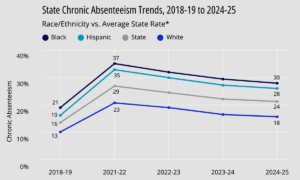
The 74: Chronic Absenteeism Trends in 27 States by Income, English Learner Status & RaceA new analysis from The 74 and FutureEd found that certain demographic groups have higher chronic absenteeism rates (i.e., students who missed at least 10% of the school year) since the pandemic. Chronic absenteeism is linked to decreased academic achievement, school engagement, and other negative long-term outcomes. The researcher used data from 26 states and the District of Columbia to analyze data between the 2018-19 and 2024-25 school years. In the last four years, attendance gaps between low-income students and their higher-income peers appeared in 23 of the 27 states. On average, low-income students’ chronic absentee rates in the 2024-25 school year were nine percentage points higher than in 2018-19. English language learner absenteeism rates increased by 11 points since 2018-19, though two states saw English language learners with better attendance compared to their native English-speaking peers. Black and Hispanic students also experienced higher chronic absenteeism rates compared to their white peers, though targeted efforts to improve these students’ attendance have narrowed the gap in attendance rates.
Child Development: Tracking the Trajectory of Executive Function from 2.5 to 6.5 Years of Age and the Impact of COVID-19Research published in Child Development measured how COVID-19 influenced children's executive function. High executive function, cognitive controls that include memory and cognitive flexibility, are associated with several long-term outcomes, such as increased academic achievement, improved life satisfaction, and better physical and mental health in adulthood. In this study, the researchers examined children's executive function between the ages of 2.5 and 6.5, with some participants tested before the pandemic. The young children completed an executive function task, which required participants to sort cards depending on size, shape, or color, and families filled out a survey on their experiences during the pandemic. Results suggest that children's executive function was impacted by the pandemic, with first graders having smaller improvements in their executive function over time compared to other participants as they aged. These findings highlight the pandemic’s disruption of children’s development, which can lead to other negative outcomes.
Policy
K-12 Dive: Education Department to Shift Student Loan Duties to TreasuryThe U.S. Department of Education will shift responsibility for the federal government's student loan portfolio to the U.S. Department of the Treasury, with implications for students’ decisions to enroll in higher education. This shift follows nine other agreements that transferred educational responsibilities to other agencies. The Treasury Department will now provide operational responsibility for collecting defaulted loans affecting 9 million borrowers. Later, the department will assume responsibilities for the rest of the student loan portfolio and administer the Free Application for Federal Student Aid (FAFSA). The FAFSA determines students’ eligibility for federal financial aid and assists colleges in creating financial aid packages, which guide student decisions on whether and where to enroll. This year, 1.6 million students completed an application. Educators and policymakers against these changes to the Education Department assert that moving school loans and the FAFSA will likely lead to errors that will have a significant impact on families. However, advocates of the move believe that the decision will simplify the aid process, providing more support for families.
WSBT: Operation Education: New School Grading System “An Improvement” for Indiana
The Indiana State Board of Education unanimously approved its K-12 Accountability Model, which aims to be a fairer process to evaluate school performance. Indiana schools have not received a grade since 2018, due to changes in state testing and criticism from educators that the scores disproportionately impacted school districts with more low-income and minority students. With the new framework, schools will receive letter grades based on points that measure the success and growth of students. Evaluation factors include student success indicators: test scores, attendance, college credits, and technical education coursework. School leaders have praised the new model for being more student-centered, which will prepare students for academic and professional pursuits after graduating high school. The South Bend Community School Corporation is preparing for these changes, with the executive director of curriculum and instruction sharing that the letter grades will be more reflective of the "learning needs and interests of our students." The law will soon be signed by Governor Mike Braun.
Around the Nation
The Hechinger Report: iPads in Kindergarten, YouTube Videos at Snack Time: Parents Are Pushing Back on Screens in the Early GradesResearch has found that children who have excessive screen time at a young age are at risk of worse mental and physical health, delayed social-emotional skills, and decreased attention spans. Meanwhile, elementary schools have been more likely to use technology in recent years, with 81% of elementary school teachers reporting that students receive devices by kindergarten. Parents are now advocating for reduced screen time in their children's classrooms. Complaints of unnecessary technology are often not focused solely on academics, but rather, on using devices for a read-aloud, "brain breaks," or during recess or lunch time. A third-grade teacher and parent in New York started initiatives that educate families and school districts to cut down on technology usage. She advocates for change because, "When I first started teaching 20 years ago, kids wanted to be veterinarians because they loved animals... Then it changed. Now, the most common answer is, ‘I want to be a YouTuber or influencer,’ and they no longer tell me why.”
The Times: American Schools Are Turning to Four-Day Weeks. Are They Happy?Over 2,100 public schools in 26 states use a four-day-a-week schedule, mostly to incentivize teachers, as it is projected that teacher shortages will increase to 200,000 spots during the school year. The schools that employ this model are mostly in rural, western states. In New Bloomfield, Missouri, the district often lost teachers who left to teach at nearby Jefferson City with higher pay. The board voted on the four-day model in the 2020-21 school year. The superintendent believes that the change had a significant impact on recruitment, with many teachers citing the new schedule as a benefit when applying. Other schools observe students' productivity increasing and behavior improving as they get to learn different trades, work on their college applications, or get extra academic support on the “off” day. Research findings on the benefits of four-day school weeks are inconsistent; one study focusing on Missouri schools found no difference between five or four school days on student attendance or satisfaction. Another study found that students' math achievement declined on a four-day schedule, especially for boys and low-income students.
The 74: This Texas Elementary Is Achieving High Reading Scores a Million Words at a TimeWindsor Park Elementary School in Corpus Christi, Texas, hosts a Millionaires Club for students who have read at least 1 million words this school year. The program, created and managed by the school librarian, was established three years ago to motivate more students to read. Last year, students collectively read over 400 million words. Their goal is to beat it this year, with students having read over 315 million words by the end of February. Windsor Park is a magnet school for gifted and talented children and is the district's only International Baccalaureate elementary school. The school is on The 74's Bright Spots list, which highlights schools that have higher third-grade literacy scores compared to what was expected, based on the school's poverty rates. The school's reading proficiency rate was up to 99% last year. The Millionaires Club will expand to other schools in the 33,000-student district in the next year. See also: Southern States Boost Early Reading, But Gains Stall in Middle School [...]
Read more...
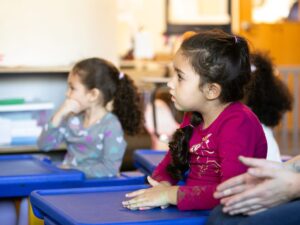
March 27, 2026At the Shore Educational Collaborative in Chelsea, Massachusetts, every student has a team of supporters. About 200 students from more than a dozen school districts come to Shore for its specialized programs for students with disabilities. The school offers small classes and robust in-school support, including counseling, behavioral support, physical, speech, and occupational therapy, and medical support from a nursing team.
Every student at Shore has an Individualized Education Program (IEP) that ensures they receive the support they need in school. And, since 2023, every student has a City Connects Coordinator to ensure they have the support they need at home.
“Our students’ IEPs typically specify some combination of in-school services from our team of counselors, speech and language pathologists, occupational therapists, physical therapists, and nurses, as well as modifications and accommodations for academic instruction in school. But what’s not on their IEP is what’s happening at home,” said Judith Lynch, Director of Therapeutic Services at the Shore Educational Collaborative. “The most important piece is what’s happening outside of school. City Connects is hooking families up with outside services, connecting students to enrichment programs, and attending to students’ needs outside of the school building. That’s what City Connects does, it addresses all those important areas that otherwise may not receive the full attention they require given the complexity of the students we serve.”
City Connects Coordinator Sarah Marzano is always there to answer the call from her students and families. Marzano—who supports students in the school's program for social, emotional, and behavioral disabilities—gets to know each family to understand where they may need support.
“I spend a lot of time every day reaching out to caregivers to build those relationships. I go out to their homes, meeting them where they are to identify needs in the comfort of their space. Especially for our parents, getting a call from school or coming into school can be traumatic and scary. I want them to know that I’m here to support them,” said Marzano.
In addition to connecting families with vital services—like food, housing, and warm clothes— Marzano goes above and beyond to provide a village for her students and families. If a parent needs help getting their child to a doctor’s appointment or basketball practice, Marzano jumps in the car and takes them herself. If a family is overwhelmed managing their child’s medication, she’s there with a color-coded pill case helping them sort through it. If a student needs socks or a deodorant wipe during school, she has a hygiene station with all the essentials. Marzano knows her students and her students know she truly cares.
“I’m there at arrival, I’m there at dismissal, I’m going in and out of the classrooms, I’m helping out at the basketball games. We really are able to insert ourselves into the culture and into the classroom. I know every kids’ name and worked to develop a connection. Just knowing something about every kid—like checking in with them about the book I saw them reading last week— those small things make such a big impact. The same goes for caregivers, checking in to see how their doctor’s appointment was or just listening while they vent can make a difference,” Marzano said.
“Because the Coordinators have more flexible schedules than our other staff, they have the ability to respond to the immediate needs of families in a way we had not been able to do before. They can devote the time and energy to making sure the needs of the whole child are being met,” said Lynch.
City Connects Coordinator Antonio Martinez, who supports students in the Shore’s programs for Intellectual and Developmental Disabilities (IDD), plays a critical role in his students’ care.
“Everyone on our team here—the teachers, counselors, Occupational Therapists, Speech Language Pathologists, Physical Therapists, Behavior Analysts, and nurses—plays a part in the students' experience here at Shore,” said Martinez. “Sarah and I are able to take a step back and get an overview of how everyone is coming together and make sure we aren’t missing anything. We can make sure things really fit for the student because each student is so different.”
A fierce advocate for students with disabilities, Martinez spends his days assisting his families as they work to attain the services and support they need from the Department of Developmental Services and coverage from MassHealth and Social Security. He helps ensure families know their rights under the Americans with Disabilities Act (ADA) and helps them find inclusive programs where they can feel comfortable and supported in their community. Martinez spends his nights and weekends advocating for a more inclusive community. He has partnered with the Parks and Recreation Department in Chelsea to advocate for more inclusive parks, consulted with the City of Chelsea on ADA compliance, and runs weekend groups for caregivers of students with disabilities.
“A lot of parents still carry that fear and stigma, that the community is not ready for their child,” Martinez said. “The groups give parents the opportunity to see me in a different light. Not as a social worker from school or authority figure, but as someone who is there for them. And it’s really helped the parents.”
The team at the Shore has learned how to tailor the City Connects model to best support their school and students while maintaining the critical goal of supporting the whole child.“Before we had City Connects, if a counselor—or program coordinator for those students without counseling services on their IEP–-found that a family needed services outside of school, it would be up to them to figure out how to get those services in place. Now, having Sarah and Antonio dedicated to addressing all those things that families need support with is really helping us meet the needs of the whole child in a more efficient way,” said Lynch. “The counselors can focus on working with students on the issues happening in school and pull in the City Connects Coordinators to make sure we are addressing all the different areas of the students’ lives.” [...]
Read more...

March 23, 2026Here’s the new edition of The Weekly Connect. Check it out and sign up to have it delivered to your inbox!
Research finds that frequent smartphone use during school hours is linked to decreased cognitive control in adolescents.
States develop independent civil rights offices for K-12 education amid changes to federal Department of Education priorities.
Thirty-nine states now mandate personal finance courses as part of high school graduation requirements.
Research and Practice
Brookings: Helping Low-Income Families Access WIC and Free Early Childhood EducationResearchers from Brookings, the Louisiana Department of Health, and Tulane University assessed the impact of administrative burden (e.g., learning about programs or complying with requirements) on families applying to the Special Supplemental Nutrition Program for Women, Infants, and Children (WIC) and free early childhood education. Government officials in Louisiana piloted an application process to help families access SNAP and other public assistance programs. The researchers used a randomized controlled trial to assess the proposed system and divided respondents into three groups: the control group received the SNAP application; the information group received the application and were notified of other programs for which they were eligible; and the support group received all information and could apply to SNAP and other programs simultaneously. Twenty-nine percent of the control group, 37.9% of the information group, and 37% of the support group applied to WIC. The percentage of families actually enrolling in SNAP was minimal, suggesting that families still have difficulties in enrolling in government benefits even with additional support.
The 74: Millions of U.S. Students Attend Schools Near Environmentally Hazardous SitesA new report from Brown University found that millions of U.S. students attend school near contaminated environmental sites. With data from over 75,000 pollution sites and public and private schools, the researchers found that over 10,000 schools are located within a quarter mile from a superfund site (historical contamination of soil and groundwater), brownfield (former industrial sites with contaminants), or a Toxic Release Inventory facility (active site that handles chemicals). Most high-need student groups are more likely to attend schools near a hazard site, including Native American, Black, Latino, English language learners, and low-income students. Urban schools are almost twice as likely as suburban or rural schools to be near a hazardous site. Private and public schools have the same likelihood of being in proximity to one. Exposure to these sites is linked to an increased risk of cancer, birth defects, and other negative health outcomes. There are currently no consistent guidelines for building schools near environmental hazard sites.
Policy
Chalkbeat: Indiana Lawmakers Pass Bill to Create Appointed Indianapolis Schools BoardIndiana lawmakers passed a bill that changes the authority of public education leaders in Indianapolis. HB 1423 establishes the Indianapolis Public Education Corporation, a board appointed by the mayor, which creates new transportation plans and a system of accountability to determine when schools should close. The board would also manage facilities for public schools in the area, which schools can opt out of, as well as distribute property taxes for school operations. The bill also exempts Indianapolis Public Schools from the $1 law, which requires school corporations to sell underused or closed schools to charter schools for $1. The bill is praised by advocates for giving more resources to charter schools, including transportation aid. Those against the bill are concerned about the reduction of the Indianapolis Public School board’s authority on education matters. The bill was sent to Governor Mike Braun, and the Indianapolis mayor will appoint members of the corporation board by March 31.
The 74: Student Nutrition and School Meals a New Focus for Nation’s Governors in 2026FutureEd analyzed speeches from 39 governors to identify common themes in their priorities, including conversations on school choice, workforce development, early learning/child care, and student health and nutrition. Fifteen governors highlighted the importance of developing career and technical education programs to align with the changing job market in fields such as health care, education, and technology. Both Democrats and Republicans talked about expanding early child care and learning programs to increase access for working parents, as well as commitments to universal pre-K programs. Last year, school phone bans were proposed to support and improve children's mental health. While school phone bans still aim to mitigate this issue, this year, many governors’ rationale for legislation focuses on improving student learning as well as online safety, especially regarding AI chatbots. With a federal focus on children's nutrition and health through the Make America Healthy Again initiative, governors followed suit and mentioned priorities in expanding free and reduced school meal access and removing artificial dyes and processed foods from school lunches. See also: 'Hungry Kids Are Not Going to Learn': See How These Students Benefit From Universal School Breakfast
Around the Nation
EdSurge: With Teens Comfortable Confiding in AI, Should Schools Embrace It for Mental Health Care?Some schools have begun to use AI programs, like Alongside, an automated student monitoring system, to support children's mental health needs. With this service, students message an AI llama named Kiwi about their problems and work together to build resilience. Clinicians monitor the AI-generated content, and school counselors receive alerts if the app suspects that a child might be at risk of harming themselves or others. The tool helps a counselor in her rural school district in Putnam County, Florida, put out "small fires," so she has more capacity to serve students needing more support. The chatbot may also be more approachable for students who are hesitant to talk to a counselor about their needs. As AI has become more relevant in school settings in the past year, educators and families continue to be concerned about schools’ overreliance on AI and its impact on students’ relationships and privacy. See also: The Lesson of A.I. Literacy Class: Don’t Let the Chatbot Think for You
The Hechinger Report: Are Microschools a Solution to Falling Public School Enrollment? One District Thinks SoNature's Gift in Greenfield, Indiana, is a microschool: an environment that offers flexible learning opportunities for a small group of students. Since the pandemic, families have become increasingly interested in and are enrolling in microschools. While microschools are typically private, the superintendent of Eastern Hancock Community Schools in Charlottesville, Indiana, wanted to explore options for his rural district. The schools were struggling financially, and many families withdrew their children from the district to enroll them in non-traditional settings. The superintendent gained approval from the state's charter school board to create the Indiana Microschool Collaborative. Nature's Gift has fifty students and is located at a 12-acre youth camp. Students manage their daily schedules and advance in the school by showing ability or interest in certain areas, not by grade level, test scores, or age. As microschool options continue to grow, supporters of the movement are concerned that they will lose their individuality and instead have to cater to state requirements and assessments.
The 74: How Pittsburgh Is Promoting Intergenerational Play to Support Early LearningA Pennsylvania pilot grant program, Let's Play PGH!, provides funding for local organizations to create playful experiences for children and adults. The grant program began in 2023 to bring organizations together to create installations. Since then, $1.5 million in funding has been granted to organizations that are incorporating developmental research, urban design, and the science of play. The Firefly Garden in suburban Pittsburgh aims to foster intergenerational play and joint exploration. The play spaces are informed by community feedback; a program director for the space shared, “When we are building anything, we know that the community is going to end up being the user. Those are the experts.” The director of education of another Pittsburgh program found that after the first round of play testing, adults observed their children playing, rather than joining in. Once the team added play prompts, like instructions to play a game of hide and seek, around the park, adults started to play too.
SEARCH
Newsletter sign-up [...]
Read more...
March 20, 2026The National Centre for City Connects Ireland is approaching its two-year anniversary. Launched in partnership with Mary Immaculate College, Boston College, and the Irish Department of Education and Youth, the National Centre continues to bring City Connects to students in Dublin. Recently, City Connect’s efforts have received press coverage of the National Centre’s inspiring work. Here is a selection of those stories.
Irish Prime Minister mentions City Connects as positive influence
Earlier this month, the North East Inner City (NEIC) released its annual report on progress being made in Dublin. At the report’s presentation, Taoiseach Micheál Martin, Ireland’s Prime Minister, mentioned City Connects as a positive influence on the city.
“It was great to hear a first-hand account by the students at O’Connell Secondary School of the positive impact that the Initiative is having in supporting young people through areas such as education, sports and wellbeing, music and creativity, and through innovative pilot initiatives like City Connects and the P-TECH Programme,” Martin said in this release.
It was the second straight year the Taoiseach has mentioned City Connects in the report’s release.
Read the NEIC report here.
City Connects administrators interviewed by RTE
Recently, City Connects Program Manager Mickey McHugh and National Lead Gerry Cullen were interviewed by RTE, Irelands national radio and broadcast station. The story is about the positive changes going on in Dublin’s inner city, which includes City Connects schools.
"In the schools we have seen higher attendance levels because they want to be in school to do the activities, they have expressed interest in," City Connects Program Manager Mickey McHugh said.
City Connects National Lead Gerry Cullen added, "We're also trying to address the out of school factors, because in the area of academics, about two thirds of the disparity in achievement can be accounted for by these out of school factors."
Read the news story here.
City Connects featured in teachers magazine
This past fall, City Connects expanded into post-primary schools, which are equivalent to middle schools in the U.S. education system, thanks to promising results from the pilot program, earning a feature in InTouch Magazine, the in-house publication of The Irish National Teachers’ Organisation (INTO).
Read more in our blog post here.
City Connects Brings “Something Bigger” to Students in Ireland [...]
Read more...
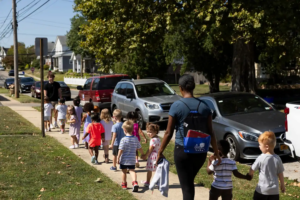
March 16, 2026Here’s the new edition of The Weekly Connect. Check it out and sign up to have it delivered to your inbox!
Millions of U.S. students attend schools located near environmentally hazardous sites.
Governors' 2026 priorities shift toward student nutrition, AI safety, and workforce development.
Indiana district turns to microschools to combat failing public school enrollment.
Research and Practice
Brookings: Helping Low-Income Families Access WIC and Free Early Childhood EducationResearchers from Brookings, the Louisiana Department of Health, and Tulane University assessed the impact of administrative burden (e.g., learning about programs or complying with requirements) on families applying to the Special Supplemental Nutrition Program for Women, Infants, and Children (WIC) and free early childhood education. Government officials in Louisiana piloted an application process to help families access SNAP and other public assistance programs. The researchers used a randomized controlled trial to assess the proposed system and divided respondents into three groups: the control group received the SNAP application; the information group received the application and were notified of other programs for which they were eligible; and the support group received all information and could apply to SNAP and other programs simultaneously. Twenty-nine percent of the control group, 37.9% of the information group, and 37% of the support group applied to WIC. The percentage of families actually enrolling in SNAP was minimal, suggesting that families still have difficulties in enrolling in government benefits even with additional support.
The 74: Millions of U.S. Students Attend Schools Near Environmentally Hazardous SitesA new report from Brown University found that millions of U.S. students attend school near contaminated environmental sites. With data from over 75,000 pollution sites and public and private schools, the researchers found that over 10,000 schools are located within a quarter mile from a superfund site (historical contamination of soil and groundwater), brownfield (former industrial sites with contaminants), or a Toxic Release Inventory facility (active site that handles chemicals). Most high-need student groups are more likely to attend schools near a hazard site, including Native American, Black, Latino, English language learners, and low-income students. Urban schools are almost twice as likely as suburban or rural schools to be near a hazardous site. Private and public schools have the same likelihood of being in proximity to one. Exposure to these sites is linked to an increased risk of cancer, birth defects, and other negative health outcomes. There are currently no consistent guidelines for building schools near environmental hazard sites.
Policy
Chalkbeat: Indiana Lawmakers Pass Bill to Create Appointed Indianapolis Schools BoardIndiana lawmakers passed a bill that changes the authority of public education leaders in Indianapolis. HB 1423 establishes the Indianapolis Public Education Corporation, a board appointed by the mayor, which creates new transportation plans and a system of accountability to determine when schools should close. The board would also manage facilities for public schools in the area, which schools can opt out of, as well as distribute property taxes for school operations. The bill also exempts Indianapolis Public Schools from the $1 law, which requires school corporations to sell underused or closed schools to charter schools for $1. The bill is praised by advocates for giving more resources to charter schools, including transportation aid. Those against the bill are concerned about the reduction of the Indianapolis Public School board’s authority on education matters. The bill was sent to Governor Mike Braun, and the Indianapolis mayor will appoint members of the corporation board by March 31.
The 74: Student Nutrition and School Meals a New Focus for Nation’s Governors in 2026FutureEd analyzed speeches from 39 governors to identify common themes in their priorities, including conversations on school choice, workforce development, early learning/child care, and student health and nutrition. Fifteen governors highlighted the importance of developing career and technical education programs to align with the changing job market in fields such as health care, education, and technology. Both Democrats and Republicans talked about expanding early child care and learning programs to increase access for working parents, as well as commitments to universal pre-K programs. Last year, school phone bans were proposed to support and improve children's mental health. While school phone bans still aim to mitigate this issue, this year, many governors’ rationale for legislation focuses on improving student learning as well as online safety, especially regarding AI chatbots. With a federal focus on children's nutrition and health through the Make America Healthy Again initiative, governors followed suit and mentioned priorities in expanding free and reduced school meal access and removing artificial dyes and processed foods from school lunches. See also: 'Hungry Kids Are Not Going to Learn': See How These Students Benefit From Universal School Breakfast
Around the Nation
EdSurge: With Teens Comfortable Confiding in AI, Should Schools Embrace It for Mental Health Care?Some schools have begun to use AI programs, like Alongside, an automated student monitoring system, to support children's mental health needs. With this service, students message an AI llama named Kiwi about their problems and work together to build resilience. Clinicians monitor the AI-generated content, and school counselors receive alerts if the app suspects that a child might be at risk of harming themselves or others. The tool helps a counselor in her rural school district in Putnam County, Florida, put out "small fires," so she has more capacity to serve students needing more support. The chatbot may also be more approachable for students who are hesitant to talk to a counselor about their needs. As AI has become more relevant in school settings in the past year, educators and families continue to be concerned about schools’ overreliance on AI and its impact on students’ relationships and privacy. See also: The Lesson of A.I. Literacy Class: Don’t Let the Chatbot Think for You
The Hechinger Report: Are Microschools a Solution to Falling Public School Enrollment? One District Thinks SoNature's Gift in Greenfield, Indiana, is a microschool: an environment that offers flexible learning opportunities for a small group of students. Since the pandemic, families have become increasingly interested in and are enrolling in microschools. While microschools are typically private, the superintendent of Eastern Hancock Community Schools in Charlottesville, Indiana, wanted to explore options for his rural district. The schools were struggling financially, and many families withdrew their children from the district to enroll them in non-traditional settings. The superintendent gained approval from the state's charter school board to create the Indiana Microschool Collaborative. Nature's Gift has fifty students and is located at a 12-acre youth camp. Students manage their daily schedules and advance in the school by showing ability or interest in certain areas, not by grade level, test scores, or age. As microschool options continue to grow, supporters of the movement are concerned that they will lose their individuality and instead have to cater to state requirements and assessments.
The 74: How Pittsburgh Is Promoting Intergenerational Play to Support Early LearningA Pennsylvania pilot grant program, Let's Play PGH!, provides funding for local organizations to create playful experiences for children and adults. The grant program began in 2023 to bring organizations together to create installations. Since then, $1.5 million in funding has been granted to organizations that are incorporating developmental research, urban design, and the science of play. The Firefly Garden in suburban Pittsburgh aims to foster intergenerational play and joint exploration. The play spaces are informed by community feedback; a program director for the space shared, “When we are building anything, we know that the community is going to end up being the user. Those are the experts.” The director of education of another Pittsburgh program found that after the first round of play testing, adults observed their children playing, rather than joining in. Once the team added play prompts, like instructions to play a game of hide and seek, around the park, adults started to play too.
SEARCH
Newsletter sign-up [...]
Read more...

March 13, 2026February 18, 2026 -- Eric Dearing, Professor of Counseling, Developmental & Educational Psychology (CDEP) at Boston College's Lynch School of Education and Human Development, conducting a lab discussion in Campion Hall. Dearing was recently named an American Educational Research Association (AERA) Fellow.
Dr. Eric Dearing, Executive Director of the Mary E. Walsh Center for Thriving Children, has been named an American Educational Research Association (AERA) Fellow. This honor is given to a select group of exemplary scholars for their exceptional contributions to, and excellence in, education research.
“It’s very exciting to be recognized for my work, and truly humbling to be considered among a group of researchers that I have respected my whole career,” Dearing said.
Over the course of nearly two decades at Boston College’s Lynch School of Education and Human Development, Dearing has established himself as a leading expert in the links between students’ lives outside of school and their performance in the classroom. His work has been cited in testimony to Congress and appeared in the New York Times, U.S. News & World Report, USA Today, and on NBC.
“We are thrilled that Eric Dearing has received this well-deserved recognition,” said Stanton Wortham, Dean of the Lynch School, in this BC News article. “His work on math learning and marginalized families has made many important contributions to the field and practice. We also greatly appreciate that he has stepped up to direct the Mary Walsh Center , a crucial organization at the Lynch School, and one that does important research and influences praxis in the United States and beyond.”
Dearing’s research emphasizes the power of families, early education and care, and neighborhood supports to bolster achievement for children growing up in poverty. Over the last few years, much of this work has been focused on building partnerships between families, community organizations, and researchers to improve early math learning for children in low-income families.
Throughout his career, Dearing’s research has shone a light on the power of opportunity. To push this work forward, his team at the Center for Thriving Children recently launched the Growing Opportunities Lab, which provides research on when, how, and why opportunities matter; investigates how government policies impact opportunities for children; and partners with practitioners to bring more opportunities to more children.
“When opportunities surround a child and their family, it builds to something more than just skill growth or just improved social-emotional wellbeing. It creates a social and cultural community of hope,” Dearing said.
Dearing is among 34 leaders in the field of education research to be selected as an AERA Fellow this year. His cohort brings the total number of AERA Fellows to 820. Dearing was selected by the AERA Council after being nominated for the fellowship by a group of peers.
Eric DearingExecutive DirectorThe Mary E. Walsh Center for Thriving Children"I'm thrilled to have been nominated, and all the more so to be selected, joining many of my heroes in the field of education research. That makes it special." [...]
Read more...

March 9, 2026Here’s the new edition of The Weekly Connect. Check it out and sign up to have it delivered to your inbox!
High digital literacy acts as a shield against cyberbullying and reduces aggressive online behavior in teens.Massachusetts is mandating science-backed reading curricula, sparking debate over state control versus teacher autonomy.Special education enrollment is rising despite total enrollment dips, fueled by better screening and pandemic-related delays
Research and Practice
K-12 Dive: Students Feel Safer in School When Their Concerns Are Heard, YouthTruth FindsYouthTruth, a nonprofit that focuses on improving schools based on student input, released a report on students' and school staff’s perceptions of school safety. Researchers surveyed nearly 200,000 students in grades 3-12 and over 19,000 educators in the 2024-25 school year. Sixty-seven percent of secondary students felt safest in their classrooms, while only 50% and 25% of students felt safe in school bathrooms and on the school bus, respectively. Black, Hispanic or Latino, and indigenous students, as well as LGBTQ+ students and English language learners, experienced higher rates of safety anxiety than their peers. There are also gaps between students' and staff's perceptions of safety. For example, 83% of high school staff believe that their school has clear safety instructions for security threats, while only 59% of high school students reported the same. Students were twice as likely to witness physical fights compared to school staff. The survey responses indicate that schools need to improve communication with students about safety mitigation efforts and ways to report concerns to lessen students' anxieties in schools.
Humanities and Social Sciences Communications: Longitudinal Bidirectional Relations Between Digital Literacy and Cyberbullying Experiences in Adolescence Children who experience cyberbullying have worse mental and physical health. Previous research has found that high digital literacy can be a protective factor against cyberbullying; however, the relationship between the two has not been deeply examined. The present study assesses the connection between digital literacy, cyberaggression, and cybervictimization. Adolescents from Hong Kong completed surveys on digital literacy and experiences of cyberbullying in the 2018-19 and 2020-21 school years. Findings indicate that high levels of cyberaggression are linked to low digital literacy. Adolescents with prior cyberbullying victimization were more likely to later have high levels of digital literacy, while those who had little improvement in their digital literacy were more likely to become victims of cyberbullying. These results suggest that digital literacy may lessen the impacts of cyberbullying and provide protection against victimization, and that these skills can be developed over time in the classroom to improve children's digital awareness and health outcomes. See also: Study Links Increased Broadband Access to Suicide Risk Among Teens
The 74: Parents Favor Free Tutoring, Summer Camp, Open Enrollment … Annual Testing? Not So Much A survey conducted by 50CAN examined 23,104 U.S. parents' satisfaction across five educational areas: school quality and opportunity; tutoring, summer, and mental health; out-of-school activities; information and engagement; and college and career readiness. Forty-seven percent of parents report being "very satisfied" with their child's school, which increased by two percentage points since last year. In comparison, low-income parents' satisfaction increased by five points. Parents are now less likely to support annual testing and are more likely to support free tutoring and summer camps. Fewer than half of parents reported that their public schools "definitely" academically prepared their children for next year. Across the political spectrum, parents are now more likely to support Education Savings Accounts and open enrollment policies, which allow students to attend a public school of their choosing. The majority of parents want schools to focus on improving tutoring and mental health supports, especially for low-income families.
Policy
The 74: COVID Relief Funds are Gone, But More States Commit to High-Impact TutoringAfter COVID-relief funds for tutoring services expired in 2024, the federal government provided states with $256 million in literacy research grants to continue these programs. Before the new funding was announced, nearly half of the states had a grants program or used school finances to help districts pay for tutoring initiatives. Eight states are now attempting to pass legislation for tutoring-related programs. Arkansas created two tutoring programs: one that provides grants to districts and charter schools, and the other that offers parents up to $1,500 to spend on literacy tutoring. In New Mexico, a bill aims to require high-impact tutoring for students with a reading or math "deficiency," and in Ohio, the Senate passed a bill that would provide free tutoring for students with the lowest math and reading scores. While pandemic relief funds allowed states to experiment with tutoring models that would benefit students, a policy expert asserted that evidence of effectiveness was uneven, while others say that lessons have been learned about how effective, personalized support can be implemented at scale.
The Hechinger Report: Massachusetts is Poised to Shake Up Literacy Instruction — and Some Educators Don’t Like It Massachusetts will soon enact one of the strongest reading laws in the country. The Massachusetts Department of Elementary and Secondary Education estimated that only half of the state's school districts have a high-quality, evidence-based curriculum for literacy instruction, and reading scores have declined in the past few years. The new legislation would require school districts to use state-approved, evidence-based curricula to improve instruction based on science-backed practices, which include lessons on phonemic awareness and comprehension. Districts can apply for a waiver, but the state must approve. Critics of the bill, including the state's largest teachers union, believe that it will take away teachers' autonomy in choosing instruction that would best serve their students. However, others believe that the legislation will improve student instruction and outcomes. The bill will soon head to Governor Maura Healey, who has praised the legislation as "another step toward ensuring every student has high-quality literacy instruction."
Around the Nation
K-12 Dive: Special Education Enrollment Keeps Growing. These 3 Graphics Show How.The number of students who qualify for special education services has increased by 3.8% compared to the previous year, totalling around 8.2 million students. Simultaneously, public school enrollment decreased slightly by 0.3% in the last school year. The percentage of special education students in general education classrooms has also increased compared to previous years. This enrollment data is reflective of experiences across the country, with the number of students with disabilities increasing while overall student enrollment is decreasing. The increase in special education diagnoses is likely due to multiple factors, such as higher awareness, early identification of autism and ADHD, universal screenings, and developmental and language delays linked to the pandemic. Texas saw the highest year-over-year percent increase in students qualifying for special education, by 10.5% between 2023 and 2024. This is likely due to a new funding initiative that gives Texas schools an additional $1,000 for each special education evaluation to test students who may have a disability.
AP News: As Literacy Rates Lag, a Pediatric Hospital is Screening for Reading AbilityNationwide Children's Hospital in Columbus, Ohio, began offering screenings through its clinics to assess children's literacy skills starting at age three. The program aims to recognize children's reading struggles early on to provide guidance and resources to families. The pediatric hospital has assigned a literacy coordinator to half of its 13 clinics. The literacy coordinator identifies areas where children might need additional support through a ten-minute assessment. Children’s reading abilities are then reassessed at their annual check-up. Staff also refer families to early education programs and give children tools and activities to practice literacy skills at home. Similar to throughout the country, students in the Columbus City Schools need support in language and literacy skills. Research shows that students who enter kindergarten with low reading ability have more difficulty catching up with peers as they age. Several other pediatric care centers, including Boston Children's Hospital, have started including literacy resources in their clinics.
SEARCH
Newsletter sign-up [...]
Read more...

March 2, 2026Here’s the new edition of The Weekly Connect. Check it out and sign up to have it delivered to your inbox!
A longitudinal study found that higher academic pressure at age 15 is associated with increased depressive symptoms and greater odds of self-harm through early adulthood.States are reconsidering reporting chronic absenteeism to child protective services, emphasizing supportive interventions over punitive responses.Teachers report rising behavioral challenges in young children, likely linked to pandemic disruptions and increased academic demands.
Research and Practice
The Lancet Child and Adolescent Health: The Association Between Academic Pressure and Adolescent Depressive Symptoms and Self-Harm: A Longitudinal, Prospective Study in EnglandPrevious research has found a link between academic pressure, adolescent depression, and risk of self-harm. Using data from the Avon Longitudinal Study of Parents and Children, researchers examined over 4,700 adolescents ages 16 to 24 through self-assessments. Adolescents who reported higher levels of academic pressures at age 15 had higher depressive symptoms through 22, with respondents at 16 years old having the strongest association between depressive symptoms and academic pressure. A one-point increase in academic pressure at age 15 was associated with a 0.43-point increase in depressive symptoms. There was also a statistically significant correlation between higher academic pressure at age 15 and risk of self-harm between ages 16 through 24 years old, amounting to an eight percent higher odds of self-harm per each one-point increase in academic pressure. The findings support the need for educators and families to create interventions to reduce academic pressure and, therefore, decrease poor mental health symptoms. See also: Longitudinal Relations Between Academic Performance and Life Satisfaction Among Elementary and Secondary School Students
The Journal of Child Psychology and Psychiatry: Parent-Led CBT Delivered Via Online and Telephone Support Alongside Usual School Practice Versus Usual School Practice Only for Young Children Identified as at Risk for Anxiety Disorders Through Screening in Schools: A Cluster Randomised Controlled TrialA new study in the Journal of Child Psychology and Psychiatry aimed to compare the impact of a parent-led therapy program and a traditional school-based mental health program. Parents participated in an intervention, which allowed them to work on cognitive behavioral strategies to help their clinically anxious young children understand their anxiety and problem-solve together. Parents and children aged four to seven completed anxiety measures, and parents also completed follow-up questionnaires throughout the study. While there was no statistically significant difference between children who were diagnosed with anxiety disorders after 12 months in the school-based and the parent-led intervention, the latter reduced child anxiety symptoms, known risks for future anxiety disorders, anxiety-related inference (i.e., jumping to conclusions), externalizing symptoms (e.g., aggression), and parent and child behaviors. These results suggest that parent-led cognitive behavioral therapy supported via online and telephone communications is an effective method to deliver mental health supports to young children in an efficient and accessible way, which can provide long-term protection against future anxiety disorders and mental health diagnoses.
Policy
Politico: Trump Administration Expands Efforts to Dismantle the Education DepartmentOn February 23, the U.S. Department of Education transferred school safety and family engagement programs to the Department of Health and Human Services (HHS). The administration attempted to halt these grants last year due to conflicts with its priorities, but ultimately awarded funding. HHS will now administer hundreds of millions of dollars in government funding for school safety programs, such as supporting mental health providers and helping students recovering from traumatic events through the School Emergency Response to Violence Program. The department will also be in charge of the community schools program and Ready to Learn, which pays for public educational media for young children. On the transfer of responsibilities to HHS, Health Secretary Robert F. Kennedy shared, "HHS brings decades of frontline experience responding to crises and disasters... we will equip communities with the tools they need to protect students, support teachers, and keep families safe.”
The New York Times: A Child Misses 3 Weeks of School. Should Protective Services Step In? School leaders and advocates across the country have debated whether child welfare officials should intervene after a student frequently misses school. In Nevada and Minnesota, school districts have stopped reporting chronic absenteeism to child protective services, and supporters want New York to adopt similar policies. Advocates of these initiatives believe that mandated reporting does little to solve issues of frequent absences and that teachers should instead report when students need more support. Half of all states do not enforce educational neglect as a reason to contact child welfare. School employees are mandated reporters, playing a vital role in helping to keep students safe. They make up one in five calls to child protective agencies, but most of their reports are not supported with an agency finding of abuse or neglect. In New York, calling child protective services is considered a "last resort," as it can typically be traumatic for families, and chronic absenteeism may be due to many different underlying causes, rather than abuse or neglect. Schools can instead work more effectively with parents and social workers to address those causes.
Around the Nation
The Hechinger Report: Biting, Kicking, Wandering the Classroom: Teachers Say There’s a Rise in Misbehavior Even Among the Littlest KidsTeachers across the country have reported increasingly severe behavioral problems in young children. Most experts believe that these behavioral problems are a result of the continued effects of the pandemic. One study found that children who had an early childhood education experience disrupted by the pandemic had more emotional problems and lower reading skills compared to those in more stable programs. Simultaneously, children are given harder academic tasks, less time for recess, and more exposure to technology than previous generations, which can lead to more mental health symptoms, aggression, and hyperactivity. Sixty-five percent of educators surveyed responded that they needed more training on classroom management. Educators have changed their approaches to teaching younger children, such as setting clear classroom procedures with their students at the beginning of the year. Some schools have focused on increasing discipline and reinforcing positive behavior, while others are creating restorative programs that encourage students to share their thoughts and perspectives to build community. See also: K-2 Suspensions Were Recently Banned in Nebraska. Now, Lawmakers Want to Go Back
K-12 Dive: More Students Have Access to School Counselors, Data ShowsThe student-to-school counselor ratio has improved by one percent in the 2024-25 school year. This improvement has led to 529,000 more students having access to a school counselor compared to the 2023-24 school year. The American School Counselor Association (ASCA) recommends that schools have a 250-to-1 ratio of students and school counselors. For the first time, high schools have met this requirement, but not elementary and middle schools, with an average range of 195 to 224 students per counselor. Ratios also differ by state; Arizona has the highest student ratio of 570-to-1, and Vermont has the lowest with 172-to-1. Research has indicated that smaller student-counselor ratios are linked to better academic performance, attendance, and graduation rates, and lower discipline infractions. The ASCA Executive Director, Jill Cook, shared that “this year’s improvement in the national student-to-school-counselor ratio reflects meaningful progress, demonstrating how even small gains expand access for hundreds of thousands more young people.”
Chalkbeat: Trauma-Informed School Model Uses Calm to Prevent Conflict in PhillyW.D. Kelley School in Philadelphia, Pennsylvania, is part of the Philadelphia Healthy, Healthy and Safe Schools (PHASeS) program, a trauma-informed initiative that supports students and teachers. The program is partially funded by Temple University and is on five campuses in the city. These schools have calming corners in most classrooms and a PHASeS room where students can visit with a trauma specialist to better regulate their emotions. The program provides staff with regular training, which helps teachers better understand the trauma their students are facing. Additionally, to serve students facing food insecurity, breakfast service was extended by two hours. In an evaluation led by Temple's College of Education and Human Development, researchers found that three-quarters of educators reported that the program improved classroom learning, and 85% said it improved their own well-being. There was also a reduction in reports of fights, harassment, and disorderly conduct in two of three campuses.
SEARCH
Newsletter sign-up [...]
Read more...

February 27, 2026This winter has been colder and snowier than any in City Connects’ students’ lifetimes. Most of the Northeast has received record-breaking amounts of snow. The recent blizzard that left many without power or heat made it even more vital that students get the support they need to attend school and be ready to learn. How do City Connects Coordinators help to address these out-of-school factors in this harsh time of year? Here are three recent stories highlighting the good and warm work being done during these cold months.
Coordinators And Communities Spread Compassion this Winter
As the snow piles up, our City Connects Coordinators are working hard to ensure students have more than just the essentials—they have opportunities to thrive.
In this post, we highlight how our teams in Boston and Poughkeepsie schools are taking action to support the "whole child" during these cold months.
See how City Connects is bridging gaps to address basic needs and creative growth this season, students connected all year long.
Coordinators And Communities Spread Compassion this Winter
A Hungry Child Can’t Learn
Hunger makes learning harder. As more families face food insecurity this winter, City Connects is expanding partnerships with community organizations to ensure students have reliable access to nutritious food. From mobile food pantries to connecting families to food and grocery resources, Coordinators are working every day to remove barriers that stand in the way of student success. Because when basic needs are met, students can show up to school ready to learn.
See how City Connects is addressing food insecurity in their communities in this blog post.
A Hungry Child Can’t Learn
Addressing Cold and Hunger in the Winter
In this post, we highlight the numerous ways Coordinators connect students with resources and create new opportunities for them to thrive and flourish, particularly during the winter months. Winter presents challenges such as food and clothing insecurity during the holidays when it can be more challenging to maintain stability. Our Coordinators work to establish a support network for students and families, ensuring that children are warm, well-fed, and are getting their strengths and needs addressed beyond academics.
Read more here.
Addressing Cold and Hunger in the Winter
SEARCH
Newsletter sign-up [...]
Read more...

February 23, 2026Here’s the new edition of The Weekly Connect. Check it out and sign up to have it delivered to your inbox!
Infant support programs significantly boost 3rd-grade scores for high-need families.
$168M in federal grants were canceled mid-year due to DEI concerns, hitting 11 states.
Lenient grading is linked to a $160k loss in lifetime earnings per classroom.
Research and Practice
JAMA Network Open: Early Intervention Developmental Programming and Childhood Academic OutcomesA new study published in Pediatrics examines the New York City early intervention (EI) program and its impact on academic achievement later in childhood. EI is Part C of the Individuals with Disabilities Education Act, which supports infants and toddlers with developmental delays or other diagnosed conditions. The study examined children who received EI in the first 36 months of life compared to those who did not receive any EI services. Services include programs such as occupational therapy, physical therapy, and special instruction. Children who received EI services before age three had increased English language arts (ELA) test scores and an increased likelihood of meeting testing standards in math and ELA by third grade. Children with mothers born outside the United States, with lower educational attainment, or on public insurance experienced greater gains in math and ELA when receiving EI services. The research builds upon numerous studies that explore the benefits of early-life interventions on developmental and cognitive outcomes.
Developmental and Psychopathology: Domain-Specific and Multidomain Resilience Among Parentally Bereaved Youth: Assessment and Associations With Long-Term OutcomesResearchers from Arizona State University examined the effects of resilience on long-term outcomes for youth ages eight through sixteen who lost a parent. Two hundred forty-four children and their caregivers were recruited for the study, and they completed assessments of the child's grief, internalizing and externalizing problems, and academic and relationship skills. Long-term outcomes, such as social detachment, personal growth, and anxiety and depression, were assessed after 15 years. Results indicate that few bereaved youth are resilient across all domains, and many show no resilience. Certain resilient trajectories predict outcomes 15 years after the baseline assessment. For example, experiencing resilience in academic skills and low internalizing problems in the initial surveys was linked to improved mental health, grief, and control over life outcomes. In contrast, children who showed resilience in the grief domain when initially surveyed experienced fewer negative impacts of grief 15 years later. These findings suggest the importance of interventions to support grieving youth across several domains, which will later impact mental health and life outcomes.
Policy
The Washington Post: Services Cut. Staff Laid Off. New Trump Cuts Hit Schools in 11 States, D.C.The U.S. Department of Education canceled some Full-Service Community Schools grants in mid-December, affecting programs in 11 states and Washington, D.C. The funding ended due to the Trump administration's concerns that the grantees included diversity, equity, and inclusion initiatives in their programs. The five-year grant focused on transforming schools into community schools. The $168 million in funding supported several programs, such as after-school clubs, dental exams, and parenting classes. One program affected, Family Academy of Multilingual Exploration, in New Haven, Connecticut, enrolls mostly Spanish-speaking and low-income students. The school lost its care coordinator and many after-school programs due to the funding cuts. To support their after-school arts program, a local nonprofit stepped in to fund the rest of the school year and continue to provide services. The governor approved emergency state funding to support community schools in some Connecticut cities through the next school year.
Higher Ed Dive: ‘We’re Now Seeing the Results’: Education Department Officials Tout FAFSA ProgressApplications for the Free Application for Federal Student Aid (FAFSA) have increased, with families reporting high satisfaction with the newly improved process. Eight million students have submitted the 2026-27 form, which was launched a week before the deadline on September 24. Legislation passed in 2021, called the FAFSA Simplification Act, pared down the number of questions students needed to answer from over 100 to 36. More students are also now eligible for the maximum Pell Grant award compared to last year, due to legislation to expand Pell eligibility. The FAFSA has a 96% satisfaction rate, and 92% of families reported it took them a reasonable time for them to complete. Additionally, the average wait time for the call center is under one minute. Previously, the system inaccurately flagged applicants as fraudulent. Now, the Education Department is working on ways to improve the identity verification process and avoid burdening families who are seeking aid.
K-12 Dive: Since E-Rate Expansion Cuts, Schools Make Difficult Choices on Hotspots
In September, the Federal Communications Commission repealed the portion of the E-rate program that helped schools and libraries receive discounts for students to access the internet in their homes and neighborhoods through school bus-based Wi-Fi and internet hotspots. The school bus Wi-Fi and hotspot effort aimed to lessen the "homework gap" for students who were unable to access the internet and, therefore, unable to complete their homework. Low-income students in urban and rural schools have been heavily impacted by a lack of internet access, which educators consider a "lifeline" for many students. For example, in California's Fresno Unified School District, only 24% of students had access to reliable internet. Many school districts already spent money on hotspots and will not receive the expected federal reimbursements, impacting budgets, and schools will have to find other funding sources to continue the program. The Fresno district will continue to provide students needed access to the internet at an annual cost of around $50,000 for Wi-Fi on school buses.
See also: Fresno Unified Elementary Students Must Return Laptops as District Shifts Focus to In-Class Use
Around the Nation
The Hechinger Report: Easy A's, Lower Pay: Grade Inflation's Hidden Damage
Preliminary results from a research study found that grade inflation is linked to worse academic outcomes, employment prospects, and future earnings. The researchers examined students at the Los Angeles Unified School District, with graduation rates at 50%, and schools in Maryland, where graduation rates exceeded 90%. In both settings, students taught by lenient graders—defined as teachers who gave higher grades to students than expected compared to students' other academic performance—did worse later in high school. Students in Maryland were less likely to attend college or be employed. They also earned less money in their career; the economic cost of one lenient grader (between the difference of giving a student a B or B-plus) is linked to a classroom losing about $160,000 in lifetime earnings. While the study has not yet been peer-reviewed, the results indicate that supporting students to improve their academic abilities, rather than inflating grades, can lead to improved outcomes post-high school.
K-12 Dive: Solving for Success: DC’s Citywide Effort to Boost Math Achievement
Schools in Washington, D.C. have taken strides to boost student math achievement through investments in curriculum and increased support to teachers. This year, fourth-grade math scores increased by ten percent compared to 2022. City-wide efforts to improve math scores include increasing per-pupil funding, boosting teacher salaries, acquiring high-quality classroom materials, and enhancing professional development opportunities. Friendship Chamberlain Elementary School, a school in the Friendship Charter School network, had the highest math and reading proficiency rates in the city. One advantage of the charter school network is that the grade-level math instruction is consistent across schools, making it easier for students who switch schools to know what is expected of them in the classroom and to maintain progress. Other schools practice looping, where teachers stay with students for multiple years, which has also led to teachers' increased understanding of student needs. See also: How 12th Grade Math & Reading Scores Have Changed Over Time
SEARCH
Newsletter sign-up [...]
Read more...

February 20, 2026It’s often the teachers who notice first. A third-grader wearing the same clothing day after day who struggles to make friends. A first grader acting out. A fifth grader who quietly slips extra snacks into her backpack and goes without a winter coat. In many schools, teachers dig into their own pockets to put extra jackets in the classroom for recess time and make extra snacks available for students who may not otherwise have food. But in a City Connects school, a teacher’s observations and concerns become a catalyst for conversation, and when appropriate, a plan of action.
The City Connects Whole Class Review makes teachers an integral part of the process. At the beginning of each school year, a Coordinator will meet with each teacher in the school to discuss the strengths and needs of each and every student in their class. The goal is to address the factors that may be interfering with a student’s readiness to learn and engage in school.
“The whole class review is a really valuable tool,” Rachel Cash-Bacon, a teacher in Boston Public Schools, said in this video (https://www.youtube.com/watch?v=FkTTSqoiRsU). “It allows us to sit down with our City Connects Coordinator and think about the students with multiple lenses. We’re thinking about them academically, which teachers always have at the forefront, but we’re also thinking about their health, their family, and all the other components that make them who they are.”
The City Connects Coordinator combines teachers’ input with students’ interests and other information to create a comprehensive and individually tailored plan of support. Coordinators will follow up with teachers, students, and families and adjust the supports as needed throughout the year. “The biggest benefit of City Connects is that it helps us support the whole child—not just academically, but socially, emotionally, and even with things going on at home,” a teacher in Indiana wrote in a survey response.
“It connects students to the right services based on their individual needs, so we’re not missing anything important. It really takes some of the pressure off us as teachers because we know there’s a system in place to help students with challenges that might otherwise get in the way of learning,” explained one teacher through an anonymous annual survey.
Another benefit of City Connects is that the process of reflecting on students, and helping to ensure they get the supports they need to be successful in the classroom also impacts teachers.
In an annual survey of teachers who worked in City Connects schools, teachers reported that the City Connects model expanded their understanding of their student’s lives outside of school. More than 94 percent of teachers reported that they were more patient with their students because they better understood the non-academic issues that contributed to their students’ struggles in the classroom, and thought about the factors influencing student behavior before reacting to the behavior.
Also, teachers in City Connects schools are more likely to stay in their jobs. Preliminary research reveals that teachers are significantly more likely to choose to stay in a school with a system of integrated student support in place, such as City Connects.
Finally, implementation of integrated student support and its increase in teachers’ understanding of the “whole child” enables teachers to build stronger relationships with students and their families.
“I have been grateful for the ways City Connects has connected our students with the resources they need to flourish,” another teacher in Indiana said in a survey. “Also, the support in supplying our teachers with resources to help our students is priceless. I couldn't be more grateful!"
Teachers are central to how and why City Connects makes a difference. By working with teachers, City Connects Coordinators provide a way for teachers to get to know students more deeply and open doors to opportunities, helping students learn and grow academically and in life.
SEARCH
Newsletter sign-up [...]
Read more...

February 16, 2026Here’s the new edition of The Weekly Connect. Check it out and sign up to have it delivered to your inbox!
A Girl Scouts survey found many girls ages 5–13 spend time online daily, with some reporting strong reluctance to disconnect.
New SNAP work requirements are expected to reduce benefits for millions of recipients, including families with teenagers.
Census data show income-based gaps in kindergarten readiness, while some cities are expanding preschool access to address disparities.
Research and Practice
Brookings: What Happens When Families Cannot Access Child Care Subsidies?A new report conducted by Brookings assessed the impact of the federal freeze on Child Care and Development Fund dollars on Virginia families. This financial assistance program subsidized child care for low-income families, and was put on pause while federal officials investigated fraud allegations. 6,548 families participated in the survey, accounting for 35% of those on the waitlist. Nearly half of respondents reported that the frozen funds caused at least one adult in their household to leave a job due to child care constraints. Families who received a subsidy during the survey period fared better economically and had lower rates of food insecurity. Additionally, a high percentage of families were concerned about the impact of insufficient funds on their children's development and access to safe child care. The results reveal the impact of child care subsidies on family outcomes and their economic impact on the community.
EdSurge News: Digital Girlhood: Study Explores Why Girls as Young as 5 Feel the Need to Be OnlineThe Girl Scouts of the USA commissioned a survey to better understand how Black and Hispanic girls feel about and use digital platforms. Researchers surveyed 1,000 children, ages five to thirteen. Girls of all ages reported spending time online, with sixty percent of girls ages five to seven logging online daily. To understand respondents' attachment to their devices, they asked how the girls would feel going on vacation to a place with no internet. Forty percent reported that they would rather skip vacation than not be able to go online. Children have also observed technology’s impact on adults in their household; half of the respondents reported that adults are also distracted by their own phones. While research has not found a unique link between screen time alone and mental health effects, the survey recommends that adults work to influence how their daughters build their relationship with digital platforms. See also: New AAP ‘Screen Time’ Recommendations Focus Less on Screens, More on Family Time
Policy
The 74: Families Brace for Tighter SNAP Work RequirementsFamilies with children ages 14 and 17 who work or volunteer fewer than 20 hours a week will no longer be eligible to receive benefits through the Supplemental Nutrition Assistance Program (SNAP). Passed through H.R.1 by the Trump Administration, these changes impact any recipients who fail to meet these requirements for any three months in a three-year period. According to the Congressional Budget Office, around 2.4 million Americans will lose SNAP assistance over the next few years. Research has shown that workers participating in SNAP are most likely to have low wages and that their jobs often have irregular hours. Parents also have to juggle child care needs, which may lead to working fewer hours. Recipients who are at risk of losing their SNAP benefits are taking on second jobs and relying on community support for emergency and food assistance.
The Hechinger Report: Advocates Worry Funding Cuts and Shifts in Aid Could Put College Further out of Reach for Lower-Income FamiliesDue to policy shifts and funding cuts, low-income families are increasingly concerned about paying for college. Funding for the program TRIO, which supports federally funded higher education support programs including Upward Bound, has been cancelled at a few participating colleges, with proposals to cut the program entirely. The nearly $1.6 billion a year in funding for TRIO and Gaining Early Awareness and Readiness for Undergraduate Programs (GEAR UP) was reduced by the Trump Administration due to concerns that the programs are part of diversity, equity, and inclusion efforts. Research has shown that TRIO participants are more likely to attend and graduate from college. While low-income student enrollment is on the decline, more students have filled out the Free Application for Federal Student Aid (FAFSA) compared to last year. Other funding cuts, such as changes to Medicaid and SNAP, are expected to reduce money available for higher education. See also: College Admissions Offices Take on a New Role: Coaxing Accepted Students to Show Up
Around the Nation
AP News: Kindergarten Readiness Varies Widely By Income, New Data Shows. Cities Are Stepping in to Help The first five years of a child's life are the most important for their development. A survey from the U.S. Census Bureau found that while two-thirds of children are reported on track for kindergarten, there is a 20% difference in school readiness when comparing low- and high-income families. A program in San Antonio, Texas, shows the impact of expanding preschool opportunities for children from low-income families. Pre-K 4 SA offers 80% of its 2,000 preschool seats free for low-income families. The program offers a mixture of services through a whole-child approach, with a focus on social-emotional and motor skill development and outdoor play. Services are provided to parents to promote family stability, such as healthy cooking classes, job application support, and vaccination clinics. These efforts improve children's academic skills; students who completed the program score higher than the state average on third-grade math and reading assessments.
SEARCH
Newsletter sign-up [...]
Read more...
February 12, 2026As snow continues to pile up in the Northeast, City Connects Coordinators are teaming up with community organizations to make sure students stay warm, fed, and connected to opportunities for growth and joy.
In Boston, Coordinators have partnered with organizations like Cradles to Crayons and Operation Warm to bring coats, hats, gloves, and socks to their students. And, with the rising cost of food and cuts to the Supplemental Nutrition Assistance Program, City Connects teams in Boston and Poughkeepsie are working on creative ways to address heightened food insecurity in their communities.
For families, we may not be able to resolve every issue, but we can alleviate some of the pressure they are facing,” said Diandria Williams, Program Coordinator for the Poughkeepsie City School District’s Office of School Engagement, who oversees City Connects in Poughkeepsie.
In addition to connecting families with vital resources this winter, Williams and her team in Poughkeepsie are finding enrichment opportunities that align with students’ strengths, needs, and interests. Because a high number of their students are interested in art, Williams and Poughkeepsie Coordinator Robert Servellon are in the process of implementing monthly workshops with a local organization called The Art Effect, which introduces students to visual arts and empowers them to develop their creative voice.
“With a child that may be struggling with reading, attending an art program where they feel more connected, more grounded, and more celebrated, might inspire and encourage them to give reading another chance,” Williams said.
Other top interests for students in Poughkeepsie include swimming, animals, LEGOs, and cooking. So Williams and Servellon are working on a potential partnership with a local traveling zoo, trying to arrange free swimming classes for students, and looking into a potential partnership for cooking classes with the Culinary Institute of America, which is located near the school district.
“We are also looking into incorporating the data from student interest surveys and Whole Class Reviews into building out student social skill groups. For example, for those students that love cooking and struggle in math, attending a group using cooking skills that are intentionally embedded with math logic, students can learn math while having fun. In using the City Connects model, we can really support students in a very unique and personalized way,” said Williams.
In Boston, Coordinators are taking action on what they learned from Whole Class Reviews and student interest surveys.
“The focus of this time of year is the tailoring of services. We have all this data we’ve collected, now it’s time to make those connections. We look at what we can provide students based on their strengths, needs, and interests that might help them through the rest of the winter and the spring. Whether it’s connecting them with a sports team, a club, or a mentor, we’re looking at those strengths and needs and making matches,” said Kevin McCaffrey, City Connects Manager of Student Support Coaching, who works with schools in Boston.
Coordinators are partnering with the YMCA, Boys and Girls Clubs, and the Boston Centers for Youth and Families to connect students with opportunities to be active indoors during the chilly winter months. They’re also working with Mass Audubon, New England’s largest nature-based conservation organization, to bring nature into classrooms this winter.
Coordinators across Boston have spent the winter finding opportunities to foster students’ strengths. For example, at Boston’s Dudley Street Neighborhood Charter School where Sheria Morrison is the Coordinator, a number of afterschool STEM learning opportunities this fall and winter, including sessions with Athena Coding, KidsInTech, and a visit to Olin College to learn about their engineering programs.
Despite the cold and snow, Coordinators in Boston and Poughkeepsie are already thinking ahead to spring and summer.
“We’ve already started planning for our summer services push. We want to connect families to summer plans, camps, enrichment opportunities, and academic opportunities to make sure they feel supported during the summer and throughout the year,” McCaffrey said.
SEARCH
Newsletter sign-up [...]
Read more...

February 9, 2026Here’s the new edition of The Weekly Connect. Check it out and sign up to have it delivered to your inbox!
Peer support and cooperative environments were associated with higher adolescent motivation for physical activity.
A $79 billion education funding bill will keep the U.S. Department of Education funded through 2026.
Mississippi improved fourth-grade reading outcomes by adopting statewide literacy reforms and accountability measures.
Research and Practice
Frontiers in Psychology: The Impact of Peer Effects on Adolescents' Physical Exercise: A Meta-Synthesis StudyResearchers analyzed qualitative and mixed-method studies on the impact of peer effects on adolescents' physical exercise. Through a review of 28 articles, the studies were synthesized into four themes: peer support and interaction; behavioral modeling and atmosphere; intrinsic motivation and identity; and educational interventions and risk management. The study found that adolescents who feel supported by their peers are more likely to learn skills from them and have more intrinsic motivation to engage in physical exercise. A culture that emphasizes effort, improvement, and cooperation will create healthy interests in physical activity, while a culture of competition and comparison will make adolescents less motivated. These negative experiences can also lead to increased risk of anxiety and marginalization for participants. The research indicates that adolescents should experience physical activity that is centered around cooperative models of peer learning, and coaches should employ strategies to improve adolescent relationships.
The New York Times: Why Boys Are Behind in Reading at Every AgeAcross the United States, reading abilities and test scores have declined for all students. However, boys have been increasingly affected; their scores are lower than girls in nearly every school district and at every grade level when tests are given. Boys are three-quarters of a year behind girls in reading in fourth grade, and around a year behind in twelfth grade. While these disparities are not new, little attention has been given to improving boys' reading skills in recent years. Several factors contribute to this widening gender gap, including girls developing language skills earlier and boys having higher rates of reading disabilities. Boys are also more likely to have lower self-confidence in reading, while girls are more likely to share that they enjoy reading. Researchers suggest strategies to improve boys' reading abilities through early-intervention programs, small group instruction, and further exposure to male role models who enjoy reading.
Policy
K-12 Dive: Trump Signs $79B Education Funding Bill Into LawThe U.S. Department of Education is now funded through September 30, 2026. The budget passed at $79 billion, which is $217 million more than this past year’s budget. Along with funding for several other departments, the bill won approval from the House at a vote of 217-214. The bill stipulates that the Education Department can move program responsibilities to other federal agencies, but they are required to provide Congress with biweekly reports on the status of interagency agreements. The bill also requires grant funding to be given to states and districts on time and for the amount Congress dictated in the funding bill. The Education Department staff must fulfill all responsibilities through the successful carrying out of programs and activities. Education leaders praised the legislation as it ensures that students can continue to receive important resources that the department provides, such as mental health supports, special education services, and programs for under-resourced communities.
AP News: Your Baby Could Qualify for $1,000 With a Trump Account. Here's What to KnowThe Trump Administration created the Trump Accounts program, which gives $1,000 to parents of babies born between 2025 and 2028. The money is invested in the stock market, and the child can access the money when they turn 18. The recipient can only use the money for specific purposes, such as paying tuition or making a down payment on a house. The goal of the program is to provide children "with real assets and a shot at financial freedom," as well as to give low-income children the opportunity to learn more and benefit from the stock market. Other states have piloted "baby bonds" programs that provide similar opportunities for infants and families, typically for low-income families. Opponents of the program assert that families would benefit more from the money now and that it will only widen wealth disparity across the country. Families can opt into the program and open accounts starting in July 2026.
Around the Nation
The New York Times: How Mississippi Transformed Its Schools From Worst to BestIn 2013, Mississippi ranked 49th in the country on national tests. Now, the state is in the top 10 for fourth-grade reading ability. To improve their ranking, the state embraced the science of reading and changed academic policies. Each school now receives a letter grade from A to F, and schools get credit if students show academic improvement. The Mississippi Department of Education brings coaches into low-performing elementary schools to improve teaching practice and also vets and approves curriculum across the state. The state holds back third graders who do not pass academic tests, which is a controversial policy for families and educators. Hazlehurst Elementary, a rural school with high rates of poverty, has a literacy coach, and students learn to read up to two hours each day. Students who are struggling receive reading intervention support at an early age. On the third graders' test day, parents will line the hallways with pompoms to cheer the test takers on.
Chalkbeat: Chess Tournament Gives Philadelphia Kids a Haven From Gun Violence150 students participated in a chess tournament in Philadelphia, Pennsylvania, with the event's goal to protect children from gun violence and teach them critical thinking skills. The program is the PECO-ASAP Checkmate Violence Tournament, hosted by the After School Activities Partnership. In Philadelphia, 10% of last year’s shooting victims were children, and many shootings take place after school hours. The event began in 2008 and hosts participants from kindergarten to twelfth grade. The After School Activities Partnership also provides opportunities for youth to engage in theater, debate clubs, and Scrabble. Chess has many known benefits, such as supporting violence prevention efforts and improving math and general cognitive ability. One site director who supports students in a neighborhood hit hard by the opioid crisis shares, "We're just a club, but it kind of becomes an extended family. I really enjoy that they have that escape. Because people find negative escapes, but this is a positive."
SEARCH
Newsletter sign-up [...]
Read more...

February 6, 2026This week, as we observe National School Counseling Week, City Connects is proud to join the nationwide celebration of the dedicated professionals who serve vital roles in supporting students in our schools. City Connects Coordinators support students and amplify their success by bridging gaps, strengthening supports, and centering the whole child. They serve as a constant source of care, guiding students toward their full potential and ensuring that out-of-school barriers do not hinder a child’s ability to learn and thrive.
City Connects attends to student success beyond academic achievement alone. We take a holistic approach that covers a student’s health and well-being, family, and access to enriching experiences. When we "amplify student success," we aren’t just looking inside the classroom, we are looking at the whole child. When a student’s strengths and needs are met, their potential to learn, grow, and thrive is unlocked!
Discover what this looks like in practice through stories from the field that showcase how our coordinators and program managers amplify student success by creating a web of support around every child.
Thank you to our Coordinators for all you do to amplify student success!
Stories from the Field…
Omega Robinson Creating Pathways at Sankofa School of Success
At the Sankofa School of Success, Coordinator Omega Robinson is described by her principal as a "burst of sunshine."
Read More
Peyton Schick Connects Minnesota Schools
In Minnesota, Program Manager Peyton Schick notes, academic success is deeply tied to a student’s well-being.
Read More
City Connects Coordinators Secure Summer Support for Families
Student success doesn’t have an off-season, and it doesn't end when the school building closes for the day. Our coordinators work months in advance to ensure the "summer slide" doesn't halt progress.
read More
Forest Park Coordinators
A student thrives when they feel they belong. In Springfield, Mass., coordinators at Forest Park Middle School work as a cohesive team to support their students' interest, needs, and well-being.
read More
The work of a Coordinator is deeply rooted in collaboration. Recently, City Connects Coordinators and Program Managers from our Boston network convened for our annual Community Partnership Panel. They explored how to collectively build effective new pathways for student and family support that can change the trajectory of a child's life. Hear their testimonies on how they proactively collaborate to ensure every student has the resources they need to thrive.
View Post
Hear from our Coordinator, Precious Chapman, from Vision Academy in Indianapolis and how she works to amplify student success within her community!
View Post
SEARCH
Newsletter sign-up [...]
Read more...

February 2, 2026Here’s the new edition of The Weekly Connect. Check it out and sign up to have it delivered to your inbox!
A Brookings report found that AI poses significant risks to student development and calls for stronger safeguards in education.
Federal immigration enforcement activity in Minnesota has disrupted school attendance and operations.
The number of homeless infants and toddlers in the U.S. has increased significantly since 2021.
Research and Practice
The Journal of Child Psychology and Psychiatry: Positive Affect as a Developmental Mediator of Early Adversity and Internalizing PsychopathologyEarly life adversities (ELAs), which include experiences like abuse and neglect, are linked to mental health disorders. The present study examined whether positive affect (e.g., feelings of joy, energy, and excitement) can mitigate the relationship between ELAs and mental health diagnoses. Utilizing data from the Adolescent Brain Cognitive Development (ABCD) study, the researchers measured children's positive affect six times between ages 9-10 and 12-13. Results indicate that as experiences of adversity increase, the likelihood of having high or stable positive affect decreases. Specifically, children with consistently low positive affect were more likely to have depression and anxiety after experiencing early adversity. This relationship was only consistent for ELA and internalizing behaviors (e.g., anxiety and depression), but not externalizing behaviors (e.g., conduct issues and aggression). Further research should investigate the sample’s outliers who experienced ELA while maintaining a high level of positive affect.
The Brookings Institution: A New Direction for Students in an AI World: Prosper, Prepare, ProtectThe Brookings Institution released a report on the impact of AI on student learning. Through consultations with 500 families, educators, and technologists, a review of 400 studies, and a Delphi panel, the report concluded that the risks of using AI in children's education outweigh the benefits. While well-designed AI technology can support children by adapting to individualized needs and optimizing teacher support, the researchers found six areas where AI affects student learning: impacts on cognitive development, social-emotional development, student safety, and autonomy, as well as lowering trust in education, and deepening equity divides. The report recommends 12 steps school districts and technology creators can take to improve learning in schools and mitigate the negative impacts of AI, including "use AI tools that teach, not tell," and design educational AI technology centered around positive mental health for children.
K-12 Dive: How a California District Embraces Student-Centered CounselingA recent study from the University of California, Los Angeles Center for the Transformation of Schools measured the impact of their comprehensive school counseling program on school climate and student outcomes. The case study focused on the Livingston Union School District in California, which serves a predominantly Hispanic and low-income student population in a rural setting. The school uses a student-centered, data-driven model based on the American School Counseling Association framework. Their program lowers the student-to-counselor ratio from the national average of 400:1 to 200:1 and requires at least 80% of counselors' time be spent directly serving students. The counseling department also visits each classroom six times per year to discuss academic topics, college and career readiness, and social-emotional learning. Following the intervention, suspension and chronic absenteeism rates improved, with many students reporting feeling a sense of belonging and academic motivation.
Policy
MPR News: Kids, Staff, Parents Detained: How Federal Activity in Minnesota is Affecting Schools and StudentsIn Minnesota, families and school staff have been increasingly impacted by the activity of Immigration and Customs Enforcement agents. In districts with federal activity, approximately 20-40% of students have been absent, many because they or their families are worried about encountering federal officers. Hispanic students and families are the most affected, with higher absentee rates. The Minneapolis and St. Paul school districts have cancelled classes in recent weeks and are working to transition many students to online learning. There have been reports of students, families, and school staff detained on school grounds. School parking lots and bus stops have been used for enforcement activities. Maintaining accurate communications with families has become a challenge for school leaders, both because of the volume of incidents and because some social media reports were untrue or exaggerated, while others accurately reflected activities impacting the school community. See also: When ICE Comes to School: How Teachers and Students Are Adapting to Trump's Immigration Crackdown
Houston Public Media: Families Can Soon Apply For Texas’ $1 Billion School Voucher Program. Here’s How it WorksIn May, Texas Governor Greg Abbott signed the voucher program into law, which puts taxpayer dollars into education savings accounts for families who want to enroll their children outside of the public school system. Families will be able to start applying to the new program on February 4th. Participating families will receive $10,000 per student each year, with homeschooled students receiving $2,000, and students with disabilities receiving up to $30,000. While the program is open to all students, state officials will move to a lottery system if applications exceed available funding. Money can be used for education-related expenses, such as private school tuition, meals, uniforms, and transportation costs. The program is not finalized, as private school partners have not been fully identified, and education experts want to know how educational quality will be assessed. Critics of the program are concerned about the impact of declining enrollment on public schools and the high cost of the $1 billion program.
Around the Nation
The Hechinger Report: Infants and Toddlers Are a Growing Group Among Homeless ChildrenThe number of homeless infants and toddlers across the United States has increased by 23% compared to 2021. The number may be even higher, as the study might not capture "hidden homeless" children living with family, friends, or in a hotel who may not be counted until they start school. The rising cost of baby supplies, child care, and cost of living, as well as increases in maternal mental health challenges, may all contribute to the high rates of homelessness. Research has found that young children are significantly impacted by being homeless; they are often behind in language development, literacy, and self-regulation skills compared to their peers. They are also at an increased risk of long-term health and learning challenges. Their unique needs have led organizations to create programs with a "two-generation approach." For example, Horizons for Homeless Children's early learning program in Boston, Massachusetts, implements trauma-informed care practices for children and support classes for parents.
Chalkbeat: How This School Chef is Building Healthy Habits One Vegetable at a TimeStudents at Circle City Prep in Indianapolis, Indiana, benefit from fresh meals made by their lead chef, Tracey Couillard, and her team of six. With Couillard's background in restaurants, she creates recipes to cook with produce that might be new to students. The school's kitchen is a Next Course Cafeteria, a program run by A Longer Table, which makes sure that the 430 students have access to scratch-made meals, fresh fruits and vegetables, and daily salads. The meals have made children more willing to try new foods, and students have asked to share recipes with their families. Couillard has also been able to build relationships with students as she "let them share their feelings because there are a lot of big feelings between kindergarten and eighth grade." In the future, Couillard hopes to have a hydroponic garden in the cafeteria so "kids could see this is what is actually nourishing our bodies."
SEARCH
Newsletter sign-up [...]
Read more...

January 27, 2026Here’s the new edition of The Weekly Connect. Check it out and sign up to have it delivered to your inbox!
High child care costs are forcing many parents, especially single mothers, to cut back or settle for inadequate care.
A bipartisan deal would fund the Education Department and boost K-12 and early learning programs.
Rural school closures are rising, with mixed evidence on student benefits.
Research and Practice
The Washington Post: Parents are Cutting Back on Child Care as Costs Stretch Budgets A survey from the Columbia University Center on Poverty and Social Policy found that one in five households report having to cut back or change their child care due to unaffordable costs. More than 2,000 households completed the survey throughout New York City, with some also participating in in-depth interviews with the researchers. About 15% of households with children younger than 12 had to stop using or cut back child care hours, and a similar number had to resort to "inadequate" child care arrangements because there were no other options. Single mothers were the most impacted by unaffordable child care, with 37% cutting back or using less desirable options. Black and Hispanic parents, younger parents, and those without a college degree were also disproportionately affected. The researchers aim to expand their survey beyond the city and gather longitudinal data to examine patterns of child care hardships.
UChicago Consortium on School Research: Connection, Trust, and Learning: Student Attendance in the Middle and High School Grades Following the COVID-19 Pandemic Researchers examined the pandemic’s impact on students' absentee rates and how it relates to academic achievement and school climate. Utilizing data from Chicago Public Schools, the study measured students enrolled in the district pre- and post- pandemic. Research indicated that chronic absenteeism increased by 20% post-pandemic. Students who missed school had lower academic achievement outcomes both pre- and post-pandemic; however, the effect was larger after the pandemic. Safety and parent engagement in schools increased children’s likelihood of attending school. Attendance was also higher in schools where students had strong peer relationships and better teachers. The research highlights how attendance impacts student achievement and school satisfaction. While reasons for absences may differ between school communities, schools can work to improve school climate and address barriers to increase student attendance.
Policy
K-12 Dive: Bipartisan K-12 Budget Proposal Would Stall Gutting of Education Department Senate and House leaders proposed a bipartisan agreement to fund the U.S. Department of Education for fiscal year 2026. The $79 billion would include increases in funding for special education programming, rural education, and Impact Aid. The proposal would also prevent the department from transferring required program responsibilities to other federal agencies and require the government to give grants to states and districts on time and maintain adequate staffing levels. Through this proposal, lawmakers are rejecting the Trump Administration's efforts to shift program responsibilities to other departments and merge multiple education grant programs into one. The funding plan is included along with budgets for other departments, as well as funding for early childhood education, the Child Care and Development Block Grant, and Head Start. The proposal, which has been praised by leaders across political lines, will be voted on by January 30, when the current continuing resolution that ended the federal government shutdown expires.
AP News: Trump Signs Law Returning Whole Milk to School LunchesPresident Donald Trump signed a bill that brings whole milk, as well as nondairy milk that meets the nutritional standard of milk, to cafeterias. The change will impact 30 million students enrolled in the National School Lunch program and overturns provisions of the Healthy Hunger-Free Kids Act, which was championed during the Obama administration. Proponents of the bill believe that whole milk was unnecessarily “targeted,” and that whole milk is both more nutritious and more well-liked by children. Some research has found that there are no meaningful differences in health outcomes between low-fat and high-fat dairy, while others have suggested that children who drink whole milk are less likely to be overweight or develop obesity. The changes to school meal guidelines may take place as soon as next school year, though school and dairy industry officials will need to reassess student interest in whole milk and its impact on production.
Around the Nation
The Hechinger Report: School Closures are Accelerating in Rural America. But Research on Whether They Help Students is Mixed The number of students in U.S. public schools dropped about 2.5 percent between 2019 and 2023, due to declining birth rates and more students enrolling in private schools. The change in student enrollment has most significantly impacted rural areas, where small schools often play a large role in community resources and opportunities. Vermont is the nation's most rural state and has lost 20% of its public school population in the past two decades. The state's governor and education secretary have called for consolidating districts and rethinking school funding and curricula. A plan calling for a minimum of 4,000 students per district, which was only met by one of the state's 119 districts, was passed in the summer. However, critics fear that consolidating schools will leave communities with less say over local school decisions and cause closures in more disadvantaged areas. Some researchers found that consolidating schools was associated with increased student test scores, while other studies suggest that school mergers are linked to lower academic performance, more absences, and behavioral issues.
Chalkbeat: More than 7,000 Detroit Students Were Paid for Their Attendance Last YearAlmost half of all high schools in the Detroit Public Schools Community District in Michigan were paid for their attendance last year, a strategy to curb chronic absenteeism rates. Daily attendance for students increased by 2.6 percent, and chronic absenteeism declined by 7.4 percent. Over 7,300 students got a $200 Visa gift card at least once in the past academic year by showing up to each class every school day in a 10-day cycle between January and March 2025, totaling $4 million worth of gift cards to students. The school district has high rates of chronic absenteeism due to barriers such as housing instability, unreliable transportation, and health concerns. In addition to financial incentives, the school district also focuses on wraparound services and has hired more attendance and academic interventionists. This year, students will receive $100 gift cards for perfect attendance in a five-day cycle, with an opportunity to earn up to $1,000.
The Washington Post: High School Students Fix Up Cars, Then Hand the Keys to Single Mothers Students at Louisa County High School in Mineral, Virginia, learn how to revive old vehicles and give them to single mothers for free. The school's automotive technology program has been running for the past eight years. They are trained on various tasks, such as brake and tire repairs, heating and cooling system services, and battery testing. The program is done in partnership with Giving Words, a local nonprofit that supports single mothers through car repairs and other donations. The program has had a profound impact on the students, which has helped them build "character and empathy." One student shared about a moment last month where he presented a vehicle to a woman with a baby, "We raised the garage doors, and we all clapped for her... I put the license plate on the car for her, and she had a little baby in her arms." By knowing who will receive the vehicle, "it gives you more of a purpose.”
SEARCH
Newsletter sign-up [...]
Read more...
January 23, 2026As a survey researcher for Boston College’s Center for Thriving Children, Nan Yang finds great joy in seeing the positive impact her work can have on children and families.
“Whenever I think about the chain reaction from what I find in the data to how we actually help kids, that makes me very happy,” Yang said.
Yang oversees the Center’s primary data collection efforts, developing everything from surveys and questionnaires to interviews and focus groups. She analyzes the data she collects from teachers, principals, community partners, and coordinators in City Connects schools to understand where the work is having an impact and what improvements can be made.
“Sometimes when you do research you feel like you are so far away from the practice. You are making some theoretical suggestions, but how far is that from being implemented in school and really helping a kid? What I love most about my job is that the distance isn’t that far,” Yang said. “I collect data from people, I bring those data to my colleagues who work with schools, and then sometimes you see those changes happen.”
Yang brings a meticulous eye to all her projects, ensuring that every survey is high quality, valid, reliable, and asking all the right questions.
“What sets Nan apart is not just her technical skill, but the way she thinks with and for others. She listens deeply, resists easy conclusions, and takes the time to understand where different perspectives are coming from before deciding how to move forward. That combination of discernment, respect, and warmth is rare. It creates trust, strengthens collaboration, and leads to better work,” said Yan Leigh, Director of Research and Evaluation at the Center for Thriving Children.
As a member of the Center’s Research and Evaluation team, Yang plays a big role in identifying new research topics as well, from digging through decades of survey data to find any interesting trends that have not yet been discovered to exploring new areas where a better understanding of City Connects’ impacts can be developed. For example, Yang and her colleague, Haibin Jiang, recently submitted a grant proposal to study the impact of City Connects on English Language Learners and their families, a project where Yang’s background in linguistics would play a part.
Before coming to the Center for Thriving Children, Yang completed her doctorate in Second Language Studies at the University of Cincinnati. Her dissertation focused on how second language learners of English use language while transitioning into their new environment. She also worked at the University of Cincinnati's Evaluation Services Center, where she gained a wealth of experience in survey development and primary data collection.
Yang completed her undergraduate degree in Teaching Chinese as a Second Language at Hebei University of Technology before earning a master’s in Teaching English as a Second Language/Applied Linguistics from Pennsylvania State University.
When applying for her role at the Center for Thriving Children, Yang felt her background in mixed methods research methodologies, data collection, and survey research aligned perfectly with the job description. But it was really the mission and vision of City Connects that drew her to the role.
“The City Connects model not only recognizes and helps children address the challenges in their lives, it also acknowledges their strengths and connects them to resources to support their overall development. That really struck me. It made me really want to be a part of this team,” Yang said.
Yang joined the team in 2023 and has already made a big impact.
“As a leader in our survey research and broader program of studies, Nan holds both the big picture and the details with equal care. She makes the people around her better, and that has a lasting impact on our team,” said Leigh.
“Everyone here has a different background and different responsibilities, but we all share the same pride in working for this team to support each and every child’s development,” Yang said.
SEARCH
Newsletter sign-up [...]
Read more...

January 20, 2026Here’s the new edition of The Weekly Connect. Check it out and sign up to have it delivered to your inbox!
Early social behaviors in childhood were associated with later emotional and peer-related outcomes, suggesting early intervention points.
The Trump administration granted Iowa flexibility to consolidate federal education funds, with other states seeking similar waivers.
Cursive writing instruction is reemerging in some schools amid renewed interest in its cognitive and practical benefits.
Research and Practice
Journal of Youth and Adolescence: Disconnect To Reconnect: How Variations between Types of Smartphone Bans Influence Students’ Well-being and Social Connectedness in Dutch Secondary EducationForty percent of countries are currently implementing a form of a smartphone ban, either in the classroom (a partial ban) or the whole school (a full ban). The current study is the first to examine how more lenient versus stricter phone bans are linked to improving children's well-being and social connectedness. The research measured these outcomes in a sample of 1,398 Dutch adolescents from 24 schools by exploring participants' problematic social media usage, screentime, well-being, social connectedness, and experience with bullying and cyberbullying. In schools with a full ban, students reported lower levels of student-teacher connectedness, and girls reported lower levels of school belonging. There was no difference in student well-being and involvement with bullying and cyberbullying in schools with a partial or full ban. The research highlights that schools with stricter rules may unintentionally harm children’s relationships in schools compared to students experiencing phone bans in the classroom.
Journal of Applied Developmental Psychology: The Longitudinal Network of Social and Emotional Development in Middle ChildhoodChildren in middle childhood, between the ages of six and twelve, experience rapid social and emotional development, which can impact their interpersonal skills and well-being. Researchers in Australia conducted a longitudinal study on children aged six to ten. They measured participants' strengths and difficulties, which include measures of peer problems, hyperactivity, and emotional symptoms. Results indicate that specific behaviors at a younger age are linked to different developmental outcomes as children age. For example, children who had frequent fights at six years old were more likely to lose their temper, lie, and be unwilling to share at eight years old. Additionally, children who were less "popular" at age eight were more likely to be bullied at age ten. The findings provide insights into critical points of intervention for children, such as reducing fights at six years old and improving children's relationships at eight years old.
Policy
The Washington Post: Trump Administration Gives Iowa Education Waiver; More States May FollowThe Trump administration granted Iowa an education waiver to have more control over how it spends taxpayer dollars on related programs. The state will be able to combine more than $9 million of funding from four sources that train teachers, support English language learners, and fund after-school programs. These changes will reduce the number of restrictions on the state's spending, and leaders say they will use the money to improve math and literacy efforts and teacher recruitment and retention. State officials calculated that these changes would save Iowa $8 million in staff time. Critics of the waiver are concerned that the lack of oversight from the federal government could result in certain student populations being overlooked, such as students with disabilities or those from lower-income communities. At least a dozen other states have also requested waivers from the government to use federal funds in ways that differ from current requirements.
K-12 Dive: New Dietary Guidelines: More Protein, Fewer Ultra-Processed FoodsThe newly released 2025-2030 Dietary Guidelines for Americans shifted federal guidance on nutrition, which will impact school meals across the country. The new guidance focuses on nutrient-dense proteins and vegetables, with the goal of eating whole and minimally processed foods. There is also a limit on added sugars (up to ten grams per meal) and a recommendation to drink full-fat dairy, which contradicts previous guidelines that encourage skim and low-fat dairy options. The United States Commissioner of Food and Drugs shared that the majority of children and teens’ caloric intake comes from ultra-processed foods, which has become "an epidemic." School nutrition program operators assert that they will need more resources from Congress to carry out the new nutritional guidelines. Currently, 71% of schools offer scratch-prepared meals daily or weekly in their cafeterias, but 93% of staff shared that they will need more staff, training, and equipment to decrease reliance on ultra-processed foods.
Around the Nation
NPR: In the U.S., Hunger is Often Hidden. But it Can Still Leave Scars on Body and Mind In the United States, signs of hunger can be less visible and take on various forms. For example, children who are too tired to participate in sports or are agitated in class may be experiencing food insecurity. Research shows that just a few days of hunger can affect children's brains and alter their cognitive, social, and emotional development, which can put children at higher risk of injury, poor health, and shorter lifespans. In 2023, 13% of American households were classified as "food insecure" by the U.S. Department of Agriculture. In September 2025, the Trump administration canceled the annual survey due to concerns over cost, fear-mongering, and redundancy, so no new data has been reported on families who are in need of food assistance. The recent changes to the SNAP program have further impacted the millions of households that rely on the government program for food. See also: 14M Children Lived in Households with Food Insecurity in 2024
The Wall Street Journal: The Hottest High Schools in Massachusetts Are Trade SchoolsMassachusetts has one of the oldest vocational high-school systems in the country. Since the 2011-2012 school year, enrollment has grown by 25%. Massachusetts has gained national attention for its work, in part by requiring districts to have advisory committees that work closely with specific industries to inform program curriculum with the field's current needs. Across the state, 5,000-10,000 students sit on waiting lists. Because the programs are so popular, all trade schools in the state are now required to have a lottery system for ninth-graders entering in fall 2026. At Nashoba Valley Tech in Westford, Massachusetts, students rotate through programs during the first semester, then are placed in a shop based on their interests and availability. While most students at the school go directly into the workforce, other schools have high rates of students who choose to go to college, some while continuing to pursue their trade.
The Washington Post: Cursive Writing is Making a Comeback Among Young StudentsIn 2010, the Common Core removed cursive as part of the required school curriculum, leading many schools to no longer teach it. However, historians and educators have worked to bring back cursive, due to its cognitive benefits and practical value. A multilingual teacher at Holmes Middle School in Alexandria, Virginia, hosts a club to teach cursive to sixth- through eighth-graders. Sherisse Kenerson began teaching the club four years ago when her students could not read what she had written on the whiteboard. She teaches her students that writing in cursive is personal and up to their own style. Students have reported that the cursive club has helped them write assignments faster, improve their spelling, and led them to read historical documents, like the Declaration of Independence. Kenerson believes that her students are in the club because "it makes them feel mature... it empowers them, because they know that not everyone can write it."
SEARCH
Newsletter sign-up [...]
Read more...

The Mary E. Walsh Center for Thriving Children

City Connects
Our Blog Sections

Stories about City Connects
Stories about how our work happens across the network. We show how every student gets the right services at the right time over time.

Stories about the Center
We frequently provide updates on the research being done by the Center and how it affects the field of integrated student support.

The Weekly Connect
Each week, our newsletter rounds up the latest news relevant to the field in one easy-to-read place.
Sign up here!
Our email newsletters are the best place to keep in touch with the Center and City Connects. We send newsletters out once every quarter. In addition, we have our Weekly Connect email that goes out every Monday.